Voice exercises
30 free voice exercises
Breathing, resonance, relaxation, pace and projection exercises for a fuller, calmer speaking voice. Each one with steps, what it should feel like, common mistakes and the research behind it.
Breath exercises
Low, steady breathing that carries every word. 9 exercises.
-
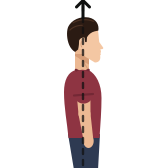 Posture resetCrown up, shoulders down, chin level, weight on both feet.
-
 Power poseFeet planted, hands on hips, chest open. Breathe low.
-
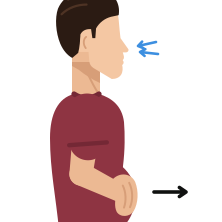 Belly breathingHand on your belly. Breathe in: it rises. Breathe out: it falls.
-
 Box breathingIn for 4 · hold 4 · out for 4 · hold 4.
-
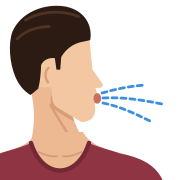 Slow exhaleIn for 4, out slowly for 8. Let your shoulders drop.
-
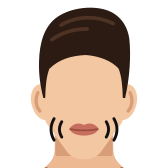 Lip trillsBlow air through relaxed lips: brrrr. Slide gently up and down.
-
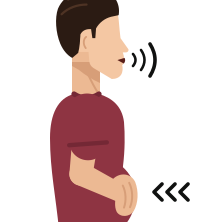 Breath pulsesHand on your belly. Pulse “ha · ha · HA” from the belly, slow and easy.
-
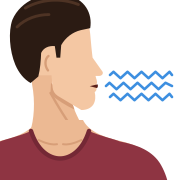 Hiss to buzzOne easy breath on a steady “sss”, the next on a steady “zzz”.
-
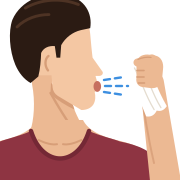 Tissue flowBlow a tissue into a steady flutter, then add a soft “ooo”.
Resonance exercises
A fuller, warmer sound you feel in your chest. 9 exercises.
-
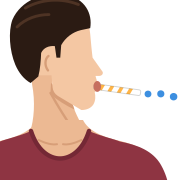 Straw phonationHum “ooo” through a straw. Glide gently up and down.
-
HummingLips closed, teeth apart. Hum and feel the buzz.
-
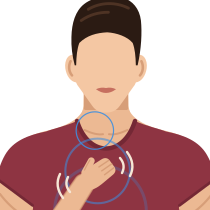 Chest humHand on your chest. Hum a comfortable low note and feel it buzz.
-
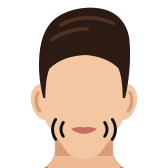 Mm-hmm: find your natural pitchSay a relaxed “mm-hmm”, like agreeing. That's your easy note.
-
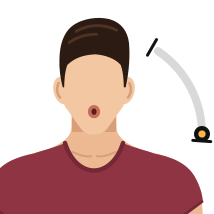 Vocal sirensGlide from an easy high note down to an easy low one on “ng”.
-
 Vowel stretchA · E · I · O · U. Open, round and unhurried.
-
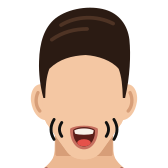 Hum into vowelsHum “mmm”, then open into “ah”. Keep the buzz as you open.
-
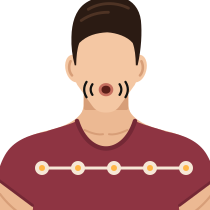 Chant to speechChant a sentence on one easy note, then say it with the same buzz.
-
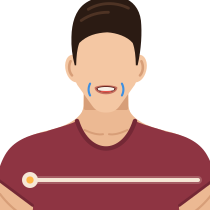 Soft steady noteA quiet “eee” on one comfortable note. Hold it only while it's easy.
Relaxation exercises
Loose jaw, throat and shoulders. No squeezing. 7 exercises.
-
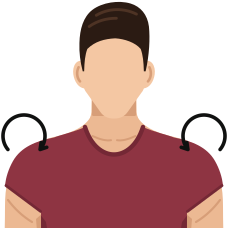 Shoulder rollsRoll your shoulders up, back and down. Slowly.
-
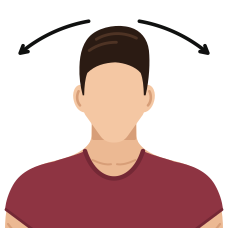 Neck releaseEar towards shoulder, hold, switch sides.
-
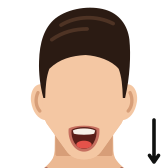 Jaw releaseOpen wide, then let your jaw hang loose.
-
 Tongue releaseLet your tongue slide out over your lip, then rest it back.
-
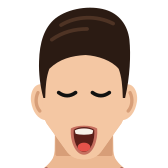 Yawn–sighStart a yawn, then sigh out gently from high to low.
-
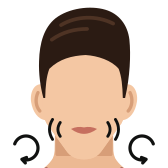 Chewing humChew loosely with an empty mouth while humming “mm-yum”.
-
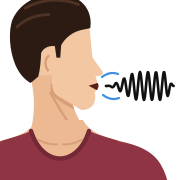 Easy onsetStart each word on a whisper of air: h-apple, h-every, h-open.
Pace & Pauses exercises
Slower speech and pauses that let words land. 3 exercises.



Projection exercises
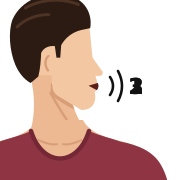
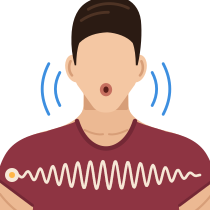
Carrying across a room without pushing. 2 exercises.
Ready-made warm-ups
The same exercises, put together for a moment of your day. Each one runs with a timer and an animated guide in the free app.
Pre-mission warm-up
5½ min5½ minutes of breath, release and resonance before today's mission.
- Belly breathing60 s
- Yawn–sigh50 s
- Jaw release50 s
- Lip trills50 s
- Chest hum60 s
- Slow count60 s
Morning voice
6½ minWake a sleepy voice gently, without forcing it.
- Posture reset50 s
- Yawn–sigh50 s
- Lip trills50 s
- Humming60 s
- Soft steady note60 s
- Vocal sirens50 s
- Vowel stretch60 s
Before a call
6½ minA warm, steady voice for the phone or a video call.
- Slow exhale60 s
- Jaw release50 s
- Mm-hmm: find your natural pitch50 s
- Chest hum60 s
- Chant to speech60 s
- Clear speech60 s
- Slow count60 s
Before a presentation
8 minFor a talk, a pitch or a toast: grounded, warm and clear.
- Box breathing60 s
- Power pose60 s
- Lip trills50 s
- Straw phonation60 s
- Vowel stretch60 s
- Swell and fade60 s
- Project your voice60 s
- Slow count60 s
Calm voice
6½ minSlow your breath and soften a tight throat before something tense.
- Box breathing60 s
- Slow exhale60 s
- Tissue flow60 s
- Shoulder rolls50 s
- Neck release50 s
- Yawn–sigh50 s
- Easy onset50 s
Resonance builder
7½ minFind the buzz and move your voice out of your throat.
- Mm-hmm: find your natural pitch50 s
- Humming60 s
- Hum into vowels60 s
- Chest hum60 s
- Straw phonation60 s
- Vowel stretch60 s
- Vocal sirens50 s
- Chant to speech60 s
Breath support
6 minBreathe low so your voice has something to stand on.
- Posture reset50 s
- Belly breathing60 s
- Hiss to buzz60 s
- Breath pulses60 s
- Slow exhale60 s
- Phrase by phrase60 s
Tension release
7 minUnclench jaw, tongue, neck and shoulders.
- Shoulder rolls50 s
- Neck release50 s
- Jaw release50 s
- Chewing hum60 s
- Tongue release50 s
- Yawn–sigh50 s
- Easy onset50 s
- Lip trills50 s
Full voice workout
9 minBreath, release, resonance and projection. The complete set.
- Posture reset50 s
- Belly breathing60 s
- Shoulder rolls50 s
- Jaw release50 s
- Tongue release50 s
- Lip trills50 s
- Straw phonation60 s
- Chest hum60 s
- Vocal sirens50 s
- Project your voice60 s
One-minute reset
1 minVoice tight or rushing? Sixty seconds back to low and slow.
- Slow exhale30 s
- Yawn–sigh15 s
- Chest hum15 s
Guides
Which exercises to use, and why, for the thing you actually want to change.
- Deep voice exercisesExercises can’t change the size of your vocal folds, but they can make your voice sound deeper: fuller, calmer and more relaxed. Here’s what works, and what doesn’t.
- Resonance exercises for your voiceResonance is how your throat, mouth and nose shape the buzz of your voice. These exercises move it out of a tight throat into an easy buzz you can feel.
- Speak from your diaphragmSpeaking from your diaphragm means breathing in low and easy, then letting a steady breath carry your words so your throat doesn’t have to squeeze. Here’s how to learn it.
- Vocal warm-up for speakingFive minutes of breath, release and easy sound before a talk, a call or a recording. What to do, when to do it, and what to skip.
- Voice projection exercisesProjecting your voice means being heard at the back of the room while your throat stays relaxed. Here’s how it works, and how to practice it.
- Sound more confident when you speakListeners judge how sure you are from your voice almost instantly. You can’t switch nerves off, but you can practice the cues that make calm audible.
- How to speak slowerTalking too fast is rarely about your mouth. It’s breath, nerves and the fear of silence. Here’s how to slow down without sounding robotic.
Questions people ask
What are voice exercises?
Short, gentle drills for the parts of you that make your voice: breathing, the muscles of the jaw, tongue, neck and shoulders, the resonance in your mouth, nose and chest, and the pace of your speech. Many come from voice therapy, simplified so you can practice them alone.
How often should I do voice exercises?
A few minutes every day beats a long session once a week. Voice clinics usually give short exercises several times a day; DEEP VOICE uses a 5½-minute warm-up before each day's mission. Stop for the day if your voice feels tired.
Can voice exercises make my voice deeper?
They can make it sound fuller, warmer and calmer: more resonance, steadier breath, a relaxed throat and a slower pace. How high or low your voice sits depends mostly on your anatomy, so no exercise can promise a lower pitch. Our deep voice exercises guide explains what you can and can't change.
Are these exercises safe?
Done gently and in your comfortable range, yes. Never press on your throat, don't use vocal fry as a technique, and stop if anything hurts or you go hoarse. If hoarseness lasts more than four weeks, see an ENT doctor or a speech-language therapist.
Your voice, safely
- Stay in your comfortable range. Never push your voice below what feels easy.
- No pressing on your throat or voice box, and no vocal fry or creak as a technique.
- Stop if it hurts or feels hoarse, scratchy or tired. Drink water and rest your voice.
- Hoarse for more than four weeks (sooner if you smoke), pain when you speak or trouble breathing? See an ENT doctor or a speech-language therapist.
These exercises are voice practice, not medical treatment. More on voice safety.
Do them every day.
DEEP VOICE turns these exercises into a short daily warm-up with a timer and an animated guide, plus one real-life voice mission a day. Free in your browser, on iPhone and on Android.