Soft steady note is adapted from Vocal Function Exercises, a voice-therapy program developed by Joseph Stemple. You sing a quiet “eee” on one comfortable note, with the buzz forward, and hold it smooth and steady only while it stays easy. Then you do the same on “oh”. It trains breath, voice and resonance to work together with very little effort.
How to do soft steady note
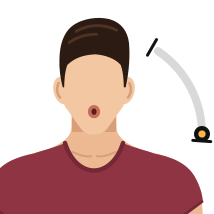
- Breathe in lowStand or sit tall with your shoulders loose. Breathe in quietly through your nose so your belly moves out.
- Find a comfortable noteHum briefly and pick a note in the middle of your easy range, one you could hum all day. Not your lowest and not your highest.
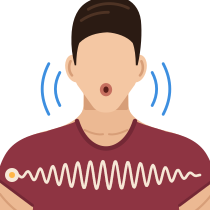
- Sing a soft “eee”Sing “eee” on that note as quietly as you can while it stays clear, with a slight smile and the buzz forward behind your lips and nose.
- Hold it only while easyKeep the note smooth and even. The moment it wobbles, thins, turns breathy or feels squeezed, stop: that’s the end of the note, not a signal to push.
- Breathe and repeatTake an easy breath and start again. Do three or four notes.
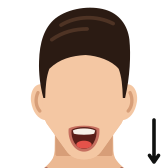
- Switch to a soft “oh”Round your lips into a small “o” and do the same on a soft “oh”, two or three times.
Your cue: A quiet “eee” on one comfortable note. Hold it only while it's easy.
What it should feel like
The note is quiet but not whispery: clear and steady, more like a soft flute than a sigh. You feel a light buzz around your lips, nose and cheekbones, and nothing in your throat or neck tightens. The note ends calmly, while you still have some air left. Some days your notes will be longer than others, and that’s normal. You’re after a smooth, easy sound, not a time.
Why it helps
The full Vocal Function Exercises program has four parts, done twice a day: a long held “eee”, a glide up, a glide down and held notes on five set pitches, all barely audible and with a forward focus, as summarized in a 2023 clinicians’ handout. A systematic review of 21 studies found positive effects in people with healthy and disordered voices, and none reported harm to the voice. In a randomized trial of 20 adults with voice problems or vocal fatigue, the program improved how people rated their own voice handicap, compared with no treatment.
DEEP VOICE keeps only the soft held notes and changes two things on purpose: you choose your own comfortable note instead of fixed pitches, and you hold it only while it’s easy instead of as long as possible. The glides are left out because they reach beyond a comfortable range; gentle vocal sirens cover that ground. The trade-off is real: a 2025 randomized trial in people with healthy voices suggests that dropping the maximal holds entirely may weaken the gain in how long you can sustain a note. Practicing alone, we choose ease over endurance.
The full program is taught and paced by a speech-language therapist, who also listens for strain; this is a simplified version for practice alone. It won’t change the pitch your anatomy gives you, but a clear, steady soft voice is the base of a fuller speaking voice. Day 49 of the challenge, Soft but full, puts it to work in a real conversation.
Common mistakes
- Holding it as long as possibleLong holds tempt you to squeeze out the end. Stop as soon as the note stops being easy.
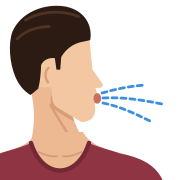
- Whispering instead of singingVery breathy is not the same as soft, and whispering for long can tire the voice. Use just enough voice for a clear, quiet tone.
- Picking a note too lowA note at the bottom of your range tends to crackle and grind. Move up to where it sounds clear and easy.
- Squeezing to stay quietIf your throat tightens to hold the volume down, use a touch more voice and let the breath carry it.
Make it easier or harder
Easier
Hum the note on “mmm” first and open into a soft “eee” for just a second or two. Short, clean notes are better than long, shaky ones.
A step further
Repeat the soft note a small step above and below your first note, keeping each one just as quiet, clear and easy.
Safety: Never hold the note until you run out of air, and stop if it turns into a squeeze, scratches or tires your throat. Rest if you feel dizzy.
Where it fits
In the DEEP VOICE app, soft steady note is part of this ready-made warm-up:
- Morning voice (6½ min): Wake a sleepy voice gently, without forcing it.
Read more in Vocal warm-up for speaking.
Questions people ask
What are vocal function exercises?
Vocal Function Exercises are a voice-therapy program by Joseph Stemple: very soft held notes and glides, practiced twice a day to balance breath, voice and resonance. A speech-language therapist usually teaches and monitors them. This page shows a gentler piece of the program for practice alone.
Why hold the note only while it’s easy?
Holding a note as long as possible without a therapist listening tends to end in a squeeze, the opposite of what you’re training. Stopping while it’s easy keeps every repetition clean. The full program, taught by a clinician, does use maximal holds.
Should a soft voice sound breathy?
No. You want quiet and clear, with the buzz forward. If the note sounds like a sigh, add a little more voice until it rings softly.
Is it good for a morning voice?
Yes. Soft, easy notes on a comfortable pitch are a gentle way to wake up the voice before you need it, without pushing.
Sources
- A randomized controlled trial of two semi-occluded vocal tract voice therapy protocols, Journal of Speech, Language, and Hearing Research (Kapsner-Smith et al., 2015)
- Vocal Function Exercises with and without maximally sustained phonation: a randomized controlled trial, Journal of Voice (Bane et al., 2025)
- Effects of Vocal Function Exercises: a systematic review, Journal of Voice (Angadi et al., 2019)
- Revamping your voice therapy toolbox (conference handout), Michigan Speech-Language-Hearing Association, 2023
Your voice, safely
- Stay in your comfortable range. Never push your voice below what feels easy.
- No pressing on your throat or voice box, and no vocal fry or creak as a technique.
- Stop if it hurts or feels hoarse, scratchy or tired. Drink water and rest your voice.
- Hoarse for more than four weeks (sooner if you smoke), pain when you speak or trouble breathing? See an ENT doctor or a speech-language therapist.
These exercises are voice practice, not medical treatment. More on voice safety.