The short answer
A vocal warm-up for speaking takes about five minutes: a few slow breaths to settle, a loose jaw and shoulders, then easy sounds such as lip trills, straw phonation or humming, and finally the first lines of what you’ll actually say, at the pace you want to say them. Do it somewhere private, ideally within half an hour of speaking. Skip throat clearing, whispering and shouting, and keep sipping water.
Does a vocal warm-up help when you’re speaking, not singing?
Your voice is made by muscles: the ones that move your breath, the small ones that bring your vocal folds together, and the ones in your jaw, tongue and neck that shape the sound. After a silent morning, or with nerves tightening everything, the first sentences often come out croaky, thin, too quiet or too fast. A warm-up is a few minutes of getting those parts moving gently before the words count.
The honest evidence: warm-ups are standard in voice training and voice therapy, but research on warming up the speaking voice is small. A 2016 systematic review found 11 studies, mostly with teachers, actors, telemarketers and students, each with roughly 12 to 36 people. Most reported something useful, such as less vocal strain in a group of teachers or less effort when talking. But the exercises and durations varied widely, the acoustic results were mixed, and one study of telemarketers found no effect. The review suggested 15 to 30 minutes, and short routines like the ones below have barely been tested.
So treat a warm-up as low-risk, sensible preparation, not a guarantee. For many speakers the biggest gain is practical: your breath settles, your jaw unclenches, and your first words of the day aren’t the ones you say to the room.
A 5-minute vocal warm-up before a presentation
Use this before a talk, a pitch, a toast or a class. Stand if you can, and keep every sound at an easy volume and a comfortable pitch.
- Settle your breath (45 seconds). Box breathing: in through your nose for 4, hold for 4, out for 4, hold for 4. Let your belly move, not your shoulders. Rest if you feel light-headed.
- Loosen up (30 seconds). Three slow shoulder rolls, then a jaw release: open comfortably wide, close, and let the jaw hang.
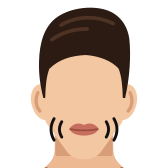
- Lip trills (45 seconds). Blow through loose lips so they flutter, then add voice and glide up and down an easy range. If your lips won’t trill, press your cheeks lightly with your fingertips.
- Straw or hum (45 seconds). Straw phonation (a soft “ooo” through a drinking straw, gliding up and down) or humming with lips closed and teeth apart. You’re after a buzz that takes very little effort.
- Open the vowels (30 seconds). Vowel stretch: A, E, I, O, U, slow and roomy, with a dropped jaw.
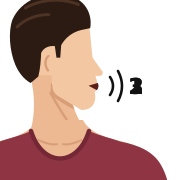
- Reach the far wall (30 seconds). Project your voice: count from 1 to 10 to the far side of the room, powered by your breath. Strong, not loud. If it scratches, back off.
- Say your opening (60 seconds). Say your first two or three sentences out loud, exactly as you plan to, with a pause and a breath at each full stop.
That last step matters most. It’s the bridge from warm-up sounds to real speech, and it means the opening line of your talk is the second time you’ve said it today, not the first.
Before a presentation
8 minFor a talk, a pitch or a toast: grounded, warm and clear.
- Box breathing60 s
- Power pose60 s
- Lip trills50 s
- Straw phonation60 s
- Vowel stretch60 s
- Swell and fade60 s
- Project your voice60 s
- Slow count60 s
The app’s Before a presentation routine is a longer, timed version: just under eight minutes of exercises. Alongside box breathing, lip trills, straw phonation, vowels and the far-wall count, it has swell and fade (one easy note growing from soft to medium and back), a slow count to set your pace, and a minute of power pose. Be clear-eyed about that one: a 2015 replication with 200 people found that power posing didn’t change hormone levels or risk-taking, although people did report feeling a little more powerful. Use it as a minute of standing tall and breathing low, not as a hormone trick.
A 2-minute warm-up before a call, interview or recording
Less time, and often less privacy. This short version works in a parked car, an empty meeting room or a corridor, and most of it is quiet.
- Three slow exhales (30 seconds). In for 4, out through pursed lips for 8. Let your shoulders drop on each out-breath.
- Jaw and tongue (20 seconds). Let your jaw hang loose, then let your tongue rest behind your bottom teeth.
- Find your easy note (20 seconds). Say a relaxed “mm-hmm”, as if agreeing with a friend. That note is close to your natural speaking pitch.
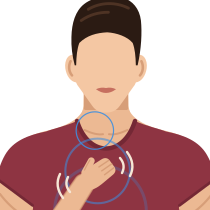
- Hum (30 seconds). Hum quietly on that note with a hand on your chest and feel the buzz. A chest hum is barely audible through a door.
- Say your first line twice (30 seconds). Your phone greeting, your answer to “Tell me about yourself”, or the first line of your script. The second time, a little slower.
Before an interview, rehearse the openings of two or three likely answers rather than whole scripts, and plan to take one low breath before each answer. Before a recording, sip water (a dry mouth makes clicks the microphone picks up), do a 20-second test take and listen back. The first take is usually the stiffest, so count it as part of the warm-up. Before a call, stand up or sit tall for at least the first minute. For how you come across once the call starts, see how to sound more confident.
Before a call
6½ minA warm, steady voice for the phone or a video call.
- Slow exhale60 s
- Jaw release50 s
- Mm-hmm: find your natural pitch50 s
- Chest hum60 s
- Chant to speech60 s
- Clear speech60 s
- Slow count60 s
In the app, Before a call is the longer version, just under seven minutes of exercises with a timer. It adds chant to speech, clear speech and a slow count.
A morning warm-up for a sleepy voice
First thing in the morning, many voices feel rough, quiet or croaky, and some sound lower than usual. Don’t push through it, and don’t try to hold on to that gravelly sound: a morning voice wakes up best gently. Drink some water, then work from breathy, easy sounds toward speech:
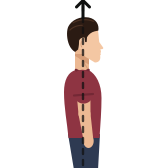
- A posture reset: crown up, shoulders down, chin level.
- Two or three soft, falling yawn-sighs.
- Lip trills, then humming, gliding gently up and down.
- A soft steady note: a quiet “eee” on a comfortable note, held only while it stays easy.
- Descending sirens on “ng”, then a slow vowel stretch.
Morning voice
6½ minWake a sleepy voice gently, without forcing it.
- Posture reset50 s
- Yawn–sigh50 s
- Lip trills50 s
- Humming60 s
- Soft steady note60 s
- Vocal sirens50 s
- Vowel stretch60 s
It’s Day 26 of the 30-day challenge: do the Morning voice warm-up before you speak to anyone, then notice how your first conversation sounds.
Where and when to warm up
When: close to when you speak. Within about half an hour is a sensible target, because a warm voice cools off if you then sit in silence for an hour. If there’s a long wait, keep it ticking over with quiet conversation, and do a few seconds of humming or lip trills just before you go on.
Where: anywhere you won’t feel watched, because feeling self-conscious makes people rush and skip steps. A parked car, an empty room, a stairwell, a restroom or the walk to the venue all work. If you can’t make sound at all, there’s still plenty to do silently:
- slow exhales and box breathing
- shoulder rolls, a gentle neck release, and jaw and tongue release
- lip trills on air alone, with no voice (an NHS lip-trill leaflet starts exactly this way)
- a closed-lip hum, which is far quieter than it sounds from the inside
-
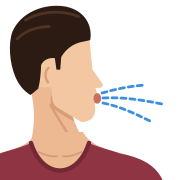 Slow exhaleIn for 4, out slowly for 8. Let your shoulders drop.
-
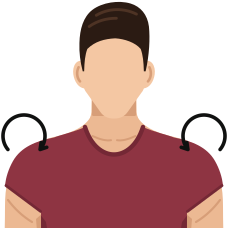 Shoulder rollsRoll your shoulders up, back and down. Slowly.
-
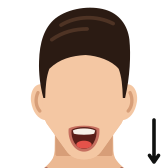 Jaw releaseOpen wide, then let your jaw hang loose.
-
 Tongue releaseLet your tongue slide out over your lip, then rest it back.
-
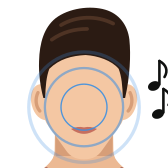 HummingLips closed, teeth apart. Hum and feel the buzz.
In the days before: learn the exercises during the week before a big talk, not in the corridor on the day. A routine you already know takes no thought, and that’s exactly what you want when you’re nervous.
What to skip before you speak
- Throat clearing. It knocks the vocal folds together and easily becomes a habit. NHS voice-care advice is to sip water and swallow instead, or try a yawn.
- Whispering to “save” your voice. Whispering is tiring and drying. If you want to rest your voice before a talk, speak quietly, or simply talk less.
- Shouting or belting to “open it up”. A warm-up for speaking stays at or below normal speaking volume, with only a brief, comfortable step up when you practice projecting. Raising your voice strains your vocal folds.
- A dry mouth. Sip water through the day, not just a gulp right before. Caffeine and alcohol are drying, so go easy on both before a big talk, and keep a glass of water where you’ll speak.
- Pushing your voice down to sound authoritative. Pressing for your lowest notes, or growling in vocal fry, tires the voice and tends to sound forced. Stay in your easy range.
- Overdoing it. No holding notes as long as you can, and no half-hour marathon before a ten-minute talk. A warm-up should leave you fresher. If anything hurts, scratches or makes you hoarse, stop.
The voice safety page has the full list. If you’ve been hoarse for more than four weeks (sooner if you smoke), or speaking hurts, see an ENT doctor or a speech-language therapist.
Put it to work: Week 9 of the challenge
A warm-up proves itself when you speak afterward. Week 9 of the challenge, “Speak to a room”, is built around one short talk:
- Day 61: prepare a three-minute talk on something you know well, with pauses and breath points marked.
- Days 62 and 63: rehearse it out loud, standing, then breathe only at the marks you planned.
- Day 64: polish the first 30 seconds until they come out calm every time.
- Day 65: do the One-minute reset, then give the talk to one person.
- Days 66 and 67: deliver it to three or more people (or on video), then write down what worked.
Week 9 is part of the 90-day challenge. If you’re starting out, the first 30 days build the breath, resonance and pace that every warm-up relies on. Open the free web app to begin.
Questions people ask
How do I warm up my voice before a presentation?
Spend about five minutes on slow breathing, loosening your jaw and shoulders, easy sounds like lip trills or humming, and counting to the far wall without pushing. Finish by saying your opening lines out loud at the pace you plan to use. Do it within about half an hour of speaking.
How long should a vocal warm-up for speaking be?
Five minutes is enough for most talks, calls and interviews, and two minutes is better than nothing. A review of speaking-voice warm-up studies suggested 15 to 30 minutes but found no agreement on length or exercises. The aim is a voice that feels easy and ready, not tired.
Can I warm up my voice without anyone hearing?
Yes. Breathing, shoulder rolls, jaw and tongue release and lip trills on air alone are silent, and a closed-lip hum is very quiet. A parked car, a stairwell or a restroom works for the rest.
Should I warm up my voice before a job interview?
A short warm-up helps: three slow exhales, a relaxed “mm-hmm” to find your easy note, a quiet hum, and the first line of your answer to “Tell me about yourself” said out loud. It takes two minutes and means your first words aren’t croaky.
What should I drink before public speaking?
Water, sipped through the day rather than gulped at the last minute, plus a glass where you’ll be speaking. Caffeine and alcohol are drying, so keep them modest before a big talk.
Is humming a good vocal warm-up?
Yes. Humming with your lips closed and teeth apart is gentle and quiet, voice therapists use it to find an easy, buzzy voice, and ASHA suggests gentle humming before a busy day of talking. Hum on a comfortable note, then open into a few words so the buzz carries into speech.
Your voice, safely
- Stay in your comfortable range. Never push your voice below what feels easy.
- No pressing on your throat or voice box, and no vocal fry or creak as a technique.
- Stop if it hurts or feels hoarse, scratchy or tired. Drink water and rest your voice.
- Hoarse for more than four weeks (sooner if you smoke), pain when you speak or trouble breathing? See an ENT doctor or a speech-language therapist.
These exercises are voice practice, not medical treatment. More on voice safety.
Sources
- Vocal warm-up and cool-down: systematic review (Ribeiro et al., 2016), Revista CEFAC
- Voice care tips for a healthy voice, Royal Berkshire NHS Foundation Trust
- Lip trills exercises, Cambridge University Hospitals NHS Foundation Trust
- Humming exercises, Cambridge University Hospitals NHS Foundation Trust
- Protect your voice this back-to-school season, American Speech-Language-Hearing Association (ASHA)
- Assessing the robustness of power posing (Ranehill et al., 2015), Psychological Science