Swell and fade is a simplified messa di voce, a classic singing exercise. On one comfortable note, you let the sound grow slowly from soft to medium and fade back to soft, all on one breath and on the same pitch. It trains you to change volume with your breath instead of your throat, which is the core of projecting your voice without pushing.
How to do swell and fade
- Breathe in lowStand tall with your feet planted. Breathe in quietly through your nose so your belly moves out.
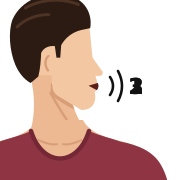
- Start soft on an easy noteOn a comfortable note, hum “nng” (the sound at the end of “sing”) or sing “ooo”, quietly but clearly.
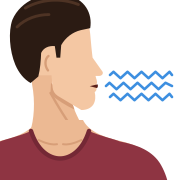
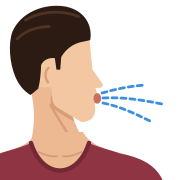
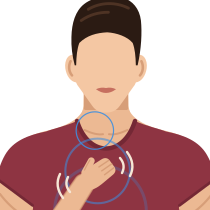
- Swell to mediumOver about three seconds, let the sound grow to a comfortable medium volume. Feel your belly and ribs do the work, not your throat.
- Fade back to softOver the next three seconds, let it shrink back to soft, staying on the same pitch until you stop.
- Rest and repeatTake a normal breath or two and go again, four to six times.
- Try it on a wordFinish by swelling and fading on a word like “morning” or “hello”, then say it at your normal speaking volume.
Your cue: One easy note: soft, a little louder, soft again. Same pitch.
What it should feel like
The sound grows and shrinks smoothly, like a volume knob turned slowly, with no jumps, and the pitch stays put. As it gets louder you feel more movement low in your belly and ribs, while your throat and neck stay as relaxed as on the soft part. The top should feel full and comfortable, nowhere near a shout. The fade is the hard part: if the note cracks, wobbles or goes breathy, make the whole swell smaller.
Why it helps
Messa di voce is an old singing exercise that is still part of voice training, yet there is little research on it. In a 2025 study, nine untrained, healthy adults did it on an “ee” vowel, about three seconds per phase, while researchers filmed their vocal folds. Pitch stayed almost steady for most of them, and no major instabilities showed up at any particular volume. One practical finding: people rushed, taking about half the time they were asked to. So count your three seconds.
Volume practice like this is also part of NHS voice care. The Royal Berkshire NHS breathing leaflet has you make sounds gradually louder, gradually quieter and quiet-loud-quiet, using your breathing muscles for the extra power instead of straining from the throat. That is exactly the skill you need to project your voice without yelling.
DEEP VOICE caps the swell at a comfortable medium, because the goal is control, not power. Smooth changes in volume make it easier to speak up in a meeting or a noisy room without your voice going thin or tight, and to come back down without fading out. Day 38 of the challenge, The far wall, takes the same breath-led power into speech. It won’t change your pitch; it gives you a steadier voice at any volume.
Common mistakes
- Pitch rising with the volumeMany voices creep up in pitch as they get louder. Keep the note the same, and if it rises, make the swell smaller.
- Pushing from the throatIf your neck tightens at the top, your throat is doing the breath’s job. Stop at a softer peak and let your belly lead.
- Going too loudMedium is the ceiling. A shout defeats the purpose and can strain your voice.
- Rushing the swellFast swells hide wobbles. Count three seconds up and three seconds down.
Make it easier or harder
Easier
Swell and fade on a voiceless “sss” first, then a buzzing “zzz”, before you add a note. Or practice only the fade, from a comfortable medium down to soft.
A step further
Do two smaller swells on one breath, soft to medium to soft to medium to soft, or swell and fade on a short phrase like “Good morning, everyone”.
Safety: Never go beyond a comfortable medium, and stop if the note scratches or cracks or your throat tightens. Rest if you feel dizzy.
Where it fits
In the DEEP VOICE app, swell and fade is part of this ready-made warm-up:
- Before a presentation (8 min): For a talk, a pitch or a toast: grounded, warm and clear.
Read more in Speak from your diaphragm, Vocal warm-up for speaking and Voice projection exercises.
Questions people ask
What is messa di voce?
It’s a classic singing exercise: one sustained note that grows from soft to loud and back to soft without changing pitch. Swell and fade is a gentle version for speakers, capped at a comfortable medium.
How do I project my voice without yelling?
Use your breath for power, keep your throat relaxed, open your mouth a little more and aim your voice at a point across the room. Practicing smooth volume changes like this one builds the breath-led control that makes it possible.
Why does my voice crack when I get louder?
Often the throat squeezes to make volume instead of the breath supporting it, or the pitch creeps up. Swell more slowly, keep the peak softer and keep the note the same. If cracking comes with pain or hoarseness that lasts, see an ENT doctor or a speech-language therapist.
Is this exercise only for singers?
No. Speakers need the same control to talk over noise, address a room and come back to a normal voice. You don’t need to sing well; a comfortable hummed note is enough.
Sources
- Influence of Messa di Voce speed on vocal stability of untrained, healthy subjects, PLOS One (Kirsch et al., 2025)
- Abdominal breathing, Royal Berkshire NHS Foundation Trust
Your voice, safely
- Stay in your comfortable range. Never push your voice below what feels easy.
- No pressing on your throat or voice box, and no vocal fry or creak as a technique.
- Stop if it hurts or feels hoarse, scratchy or tired. Drink water and rest your voice.
- Hoarse for more than four weeks (sooner if you smoke), pain when you speak or trouble breathing? See an ENT doctor or a speech-language therapist.
These exercises are voice practice, not medical treatment. More on voice safety.