The short answer
You can’t exercise your way to a lower natural pitch: that is set mostly by the size of your larynx and vocal folds. You can make your voice sound deeper by breathing low, relaxing your jaw and throat, building resonance with humming, speaking at the easy low end of your comfortable range instead of a tense, raised pitch, and slowing down. Ten minutes a day for a few weeks turns that into a habit.
What makes a voice sound deep
When people hear a voice as “deep”, they are reacting to several things at once. Pitch is only one of them.
- Pitch. How fast your vocal folds vibrate. Longer, heavier folds in a bigger larynx vibrate more slowly and sound lower. This is anatomy, and it’s the part exercises don’t change.
- Resonance. The buzz your vocal folds make is shaped by your throat, mouth and nose before anyone hears it. A relaxed, open throat and a loose jaw give it more room, so it comes out fuller and warmer. Research on how listeners judge voices shows that these resonances matter alongside pitch (Dahl et al., 2022).
- Breath. A low, steady breath gives the voice an even, solid tone. Shallow breathing high in the chest makes it thin, breathy or squeezed.
- Pace. Slow speech with pauses sounds calm and sure. Rushing tends to push everything up together: pace, pitch and pulse.
- Tension. A tight jaw, tongue or neck thins the sound and nudges the pitch up. Stress does the same: studies of people under pressure often find their pitch rises, though not in everyone (Van Puyvelde et al., 2018).
Put together, a voice that sounds deep is usually a relaxed one, at the easy low end of its own range, carried by a steady breath. Four of those five things are trainable.
Can you make your voice deeper permanently?
Your natural pitch range is mostly set by your body. At puberty, testosterone makes the larynx grow and the vocal folds lengthen and thicken, which is why voices drop in the teenage years and keep maturing into the twenties (KidsHealth). Testosterone taken as hormone therapy can deepen a voice too, by an amount that varies a lot from person to person (ASHA). Surgery that changes the vocal folds or larynx exists, but it is a medical decision made with an ENT voice specialist, not a shortcut.
Voice therapy can shift the pitch you habitually speak at, but only a little. In one study, a single session of hands-on techniques with a speech-language therapist moved average speaking pitch by about one and a half semitones (roughly one and a half piano keys), with very different results from person to person. In an earlier case study using the same techniques, the change was gone within three days (Dahl et al., 2022). Those techniques are done by the clinician: never press on your own throat or larynx. ASHA advises against changing your pitch without a skilled professional, because forcing it can lead to misuse and strain.
So what can be permanent? The habits. Many people speak a little higher and tighter than their voice needs to, especially when nervous or rushed. Letting the voice settle at its easy note, instead of forcing it down, is where most of the “deeper” difference comes from. Practice until that is simply how you talk: that is what “naturally” and “permanently” can honestly mean.
The exercises that make a voice sound deeper
Work in this order: release tension, find your easy note and its buzz, carry it into words, then breathe low and slow down.
1. Release the jaw and throat. Tension is the main thing that thins a voice, so start here. A yawn–sigh widens the back of the throat, jaw release lets the jaw hang, and lip trills get air and voice moving with almost no effort.
-
 Yawn–sighStart a yawn, then sigh out gently from high to low.
-
 Jaw releaseOpen wide, then let your jaw hang loose.
-
 Lip trillsBlow air through relaxed lips: brrrr. Slide gently up and down.
2. Find your easy note and the buzz. Say a relaxed “mm-hmm”, as if agreeing with a friend. That note is close to where your voice is comfortable (find your natural pitch). Then hum on it with a hand flat on your upper chest and feel the buzz. These are the humming exercises that help a deeper-sounding voice, as long as the note stays easy. If the hum turns gravelly or tight, you’ve gone below your comfortable range: come back up.
-
 Mm-hmm: find your natural pitchSay a relaxed “mm-hmm”, like agreeing. That's your easy note.
-
 Chest humHand on your chest. Hum a comfortable low note and feel it buzz.
-
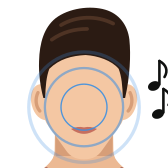 HummingLips closed, teeth apart. Hum and feel the buzz.
3. Carry it into words. A hum on its own won’t change how you talk. Open it into vowels (“mmm-ah”), then into words that start with m (“many”, “morning”), then chant a whole sentence on one easy note and speak it with the same buzz. NHS voice clinics teach the same hum-to-speech ladder (Cambridge University Hospitals).
-
 Hum into vowelsHum “mmm”, then open into “ah”. Keep the buzz as you open.
-
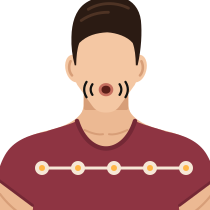 Chant to speechChant a sentence on one easy note, then say it with the same buzz.
-
 Vowel stretchA · E · I · O · U. Open, round and unhurried.
4. Breathe low and slow down. This is what “speaking from your stomach” really means. The sound is still made in your larynx, but a low, relaxed breath takes the pressure off your throat, so the voice comes out fuller. A slow count adds the pauses that make a voice sound calm. Our guide to speaking from your diaphragm covers it step by step.
-
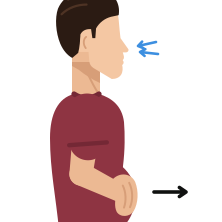 Belly breathingHand on your belly. Breathe in: it rises. Breathe out: it falls.
-
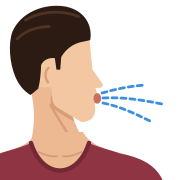 Slow exhaleIn for 4, out slowly for 8. Let your shoulders drop.
-
 Slow countCount to 10 in pairs. Pause and breathe after every two.
A note on honesty: in small pilot studies with healthy speakers, chant talk and the yawn–sigh slightly raised average pitch (Meerschman et al., 2016). That’s fine. They are here for ease and resonance, not for pitch.
A daily 10-minute deep voice routine
Ten minutes once a day beats an hour on Sunday. Clinic leaflets ask for short, frequent practice for the same reason. Here is a simple order:
- Breathe (1 minute). One hand on your belly. Breathe in through your nose and let the belly move out, then breathe out slowly through soft lips.
- Release (2 minutes). Three or four yawn–sighs, then jaw release and lip trills.
- Find the note (2 minutes). “Mm-hmm”, then a chest hum on that easy note. Slide it a little up and down until the buzz under your hand is strongest without effort.
- Into words (2 minutes). “Mmm-many, mmm-morning, mmm-more”, then chant a sentence on one note and speak it.
- Use it (3 minutes). Read a page aloud slowly, with a low breath at every full stop, keeping the buzz. Once a week, record the last minute.
If you’d rather follow a timer, the pre-mission warm-up in DEEP VOICE covers the same ground in about five and a half minutes. Add a few minutes of reading aloud and you’re at ten.
Pre-mission warm-up
5½ min5½ minutes of breath, release and resonance before today's mission.
- Belly breathing60 s
- Yawn–sigh50 s
- Jaw release50 s
- Lip trills50 s
- Chest hum60 s
- Slow count60 s
Want more resonance work? The longer resonance builder routine is in our resonance exercises guide.
What to avoid
Most bad deep-voice advice comes down to forcing the pitch down. It doesn’t work, and it can hurt.
- Pushing your voice down. Speaking below your comfortable range makes the voice tight, gravelly and quiet, and it tires fast. ASHA lists muscle tension dysphonia and vocal nodules among the risks of changing your voice without proper guidance.
- Vocal fry. The creaky rattle at the bottom of the voice is a different way of vibrating, in separate pulses (Herbst, 2020). It isn’t a deeper version of your voice, and it doesn’t carry. Don’t use it as a technique.
- Pressing on your throat or larynx. Never push your Adam’s apple down or press on your neck to change your voice.
- The “lowest note” trap. Hunting for the lowest note you can make, or holding notes as long as possible, trains strain, not depth. Your useful speaking voice lives in the easy part of your range.
- Shouting to sound powerful. Volume comes from breath, not throat. See voice projection exercises.
A voice that sounds deep and strained is worse than one that is relaxed and a little higher: listeners hear the effort. Stop if anything hurts, scratches or leaves you hoarse. If you’re hoarse for more than four weeks (sooner if you smoke), if speaking hurts or if you have trouble breathing, see an ENT doctor or a speech-language therapist.
How long does it take to get a deeper voice?
It depends on what you mean by deeper.
- Right away: after a warm-up your voice usually feels easier and a little fuller, but that fades if you go straight back to old habits.
- After a few weeks of daily practice: many people can hear a difference when they compare recordings, in steadier breath, a slower pace and more buzz. That is why the challenge has you record the same text every ten days.
- The habit: using that voice in real conversations without thinking about it is the slow part. Expect weeks to months of daily practice, and expect it to slip under stress at first.
What doesn’t happen is your natural pitch range dropping because of exercises. Anyone promising a lower pitch in seven days is selling something.
Notes for women, teenagers and trans or nonbinary readers
Women. Everything here works the same way for higher voices. The goal is usually a warmer, steadier voice that doesn’t climb when you’re nervous, not a typically male pitch, so don’t chase a pitch your voice wasn’t built for. Chest vibration gets harder to feel the higher the note; if you feel little under your hand, use the buzz on your lips and face instead. It is just as useful.
Teenagers. If you’re still going through puberty, your voice is still changing. Cracks are normal and temporary, and many voices keep maturing into the twenties (KidsHealth). Nothing speeds this up, and pushing your voice down to sound older can strain it. These exercises are fine for a relaxed, steady voice; give your body time for the rest. If you’re worried about how your voice is developing, talk to your doctor.
Trans and nonbinary readers. If you want your voice to fit your gender, a speech-language therapist who offers gender-affirming voice training is the best guide. They work on resonance, intonation and how you use your voice as well as pitch, and they do it safely. ASHA notes that the voice effects of hormone therapy vary and are not always enough on their own. The exercises here are general voice practice: fine alongside that work, not a replacement for it. If you wear a binder, breathing exercises may feel limited, so go gently and mention it to your clinician.
How the 30, 60 or 90-day challenge builds it
Knowing the exercises is the easy part. Using the voice when it counts is what the DEEP VOICE challenge is for: a short warm-up and one real-life voice mission a day, for 30, 60 or 90 days, across five areas: breath, resonance, relaxation, pace and projection.
- Week 1: find your baseline. Record your everyday voice and find where you hold tension.
- Week 2: breathe low. Belly breathing, longer exhales and a breath before you speak.
- Week 3: find your resonance. Your easy note, humming into words, straw work.
- Week 4: slow down. One thought per breath, falling endings, pauses.
- Days 29–30: the Level 1 test. Use it all in one day, then record the Day 1 text again and compare.
The 60 and 90-day versions go on to pressure, bigger rooms, calls and talks. See every mission on the challenge page, or start today in the free web app.
Questions people ask
How can I make my voice deeper naturally?
Relax your jaw and throat, breathe low from the belly, hum to find the buzz on a comfortable note, and speak more slowly. Practice about ten minutes a day and use that voice in real conversations.
Can you make your voice deeper permanently?
Your natural pitch range is set mostly by anatomy and hormones, and exercises won’t change it. What can last is the habit: a relaxed throat, low breathing and an unhurried pace. Once those are automatic, your voice keeps sounding fuller.
Do humming exercises make your voice deeper?
Humming doesn’t lower your pitch. It helps you find an easy note and a resonant, buzzing voice, which sounds fuller and warmer. Hum on a comfortable note, then carry the buzz into words, or it stays an exercise.
How do I speak from my stomach so my voice sounds deeper?
Your voice is made in your larynx, not your stomach. The advice really means breathing low, so your belly moves and your shoulders stay still, then letting a steady breath carry your words so your throat doesn’t squeeze.
Do deeper voice exercises work for women?
Yes, in the same way: they make a voice warmer, steadier and more relaxed, especially under pressure. They won’t move a voice into a typically male range, and you shouldn’t try to force it there.
Can I make my voice deeper without testosterone?
Without hormones, the pitch range itself changes very little. Resonance, breath, pace and intonation can still change how your voice comes across quite a lot. For gender-affirming voice goals, a speech-language therapist who specializes in it is the best guide.
Your voice, safely
- Stay in your comfortable range. Never push your voice below what feels easy.
- No pressing on your throat or voice box, and no vocal fry or creak as a technique.
- Stop if it hurts or feels hoarse, scratchy or tired. Drink water and rest your voice.
- Hoarse for more than four weeks (sooner if you smoke), pain when you speak or trouble breathing? See an ENT doctor or a speech-language therapist.
These exercises are voice practice, not medical treatment. More on voice safety.
Sources
- Practice Portal: Voice Disorders, American Speech-Language-Hearing Association (ASHA)
- Practice Portal: Gender Affirming Voice and Communication, American Speech-Language-Hearing Association (ASHA)
- Why Is My Voice Changing? (for Teens), Nemours KidsHealth
- Voice and Speech Changes in Transmasculine Individuals Following Circumlaryngeal Massage and Laryngeal Reposturing (Dahl et al., 2022), American Journal of Speech-Language Pathology
- Registers: The Snake Pit of Voice Pedagogy, Part 1 (Herbst, 2020), Journal of Singing, NATS
- Voice Stress Analysis: A New Framework for Voice and Effort in Human Performance (Van Puyvelde et al., 2018), Frontiers in Psychology