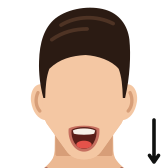
A lip trill is a relaxed “brrr” made by blowing air through loose, closed lips so they flutter, like a motorboat or a horse’s snort. Done with a gentle voice and slow pitch glides, it is one of the most common warm-ups in voice therapy and singing. Speech therapists use it to ease tension in the lips and throat and to practice smooth, steady breath support.
How to do lip trills
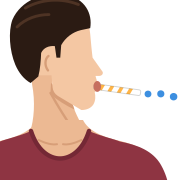
- Sit or stand tallSit or stand with your shoulders down and your jaw loose. Breathe in quietly through your nose, low into your belly.
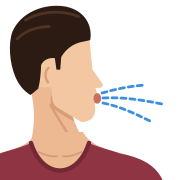
- Trill on air onlyClose your lips lightly, without pursing, and blow a steady stream so they flutter: “brrr”. No voice yet, and stop while you still have air left.
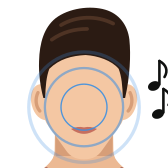
- Add a soft voiceNow add a quiet, easy sound on a comfortable note, like a purring engine. Keep it soft and even, not loud.
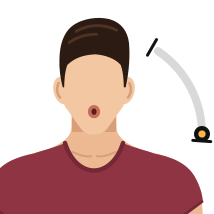
- Glide gently up and downOn one breath, slide the trill slowly up a little and back down, like a gentle siren, staying in the middle of your range.
- Help stuck lips with fingertipsIf your lips stop fluttering, press a fingertip lightly into each cheek beside the corners of your mouth. This takes weight off the lips so they can move.
- Finish on a wordEnd a few trills by opening straight into a vowel or a word, keeping the same ease: “brrr-ah”, “brrr-own”, “brrr-moon”.
Your cue: Blow air through relaxed lips: brrrr. Slide gently up and down.
What it should feel like
Your lips should tickle and buzz, and the sound should be even, like a small engine idling. Your throat should feel as if it is doing almost nothing: the work is in the steady breath and the loose lips. Afterwards your voice often feels a little easier and clearer. If your throat squeezes or your face goes red, you are blowing too hard or holding on too long.
Why it helps
A lip trill is a semi-occluded vocal tract exercise: your lips partly close the exit for the air, which builds a little pressure in your mouth. Voice researchers describe how that back-pressure works like a cushion, so the vocal folds can vibrate with less force while your breathing muscles do slightly more of the work (Hijleh and Pinto, Journal of Singing, 2021). The flutter also makes that pressure pulse, which some researchers liken to a gentle massage.
NHS speech and language therapy leaflets give four aims for lip trills: releasing tension in the lips and mouth, reducing strain at the vocal folds, improving breath support and control, and widening your pitch range without straining (Cambridge University Hospitals NHS). ASHA notes that clinicians often pair them with pitch glides to build breath support without tension (ASHA).
How strong is the evidence? In a small randomized, sham-controlled trial, 35 adults with voice problems practiced lip trills, straw phonation or water-resistance exercises for three weeks. The lip-trill and straw groups improved on an objective voice-quality score; the control group did not change (Meerschman et al., 2019). Promising but modest, and in patients rather than healthy speakers. Lip trills won’t change how high or low your voice sits; they give you an easier, better-supported sound to speak with, which is why they belong in any vocal warm-up for speaking.
Common mistakes
- Blowing too hardUse the least air that keeps your lips moving. Research suggests loud, forceful trills may make the vocal folds work harder, which defeats the point.
- Pursing or tightening the lipsTight lips can’t flutter. Let them rest together loosely, the way they sit when your mouth is closed at rest.
- Holding on until breathlessStop each trill while you still have air. Running on empty makes the throat squeeze.
- Reaching for extreme notesKeep the glides in the middle of your range. Chasing very high or very low notes adds tension instead of releasing it.
Make it easier or harder
Easier
Trill on air only and use your fingertips on your cheeks. If it still won’t come, hum or use a straw: they give a similar effect.
A step further
Trill a short tune on one breath, or glide in slow waves, keeping it soft and in your comfortable range.
Safety: Stop if you feel dizzy, light-headed or strained, and take a few normal breaths. Skip lip trills when you have a cold or a sore throat, and rest your voice instead.
Where it fits
In the DEEP VOICE app, lip trills is part of 5 ready-made warm-ups:
- Pre-mission warm-up (5½ min): 5½ minutes of breath, release and resonance before today's mission.
- Morning voice (6½ min): Wake a sleepy voice gently, without forcing it.
- Before a presentation (8 min): For a talk, a pitch or a toast: grounded, warm and clear.
- Tension release (7 min): Unclench jaw, tongue, neck and shoulders.
- Full voice workout (9 min): Breath, release, resonance and projection. The complete set.
Read more in Deep voice exercises and Resonance exercises for your voice.
Questions people ask
What are the benefits of lip trills?
They relax the lips and face, train a steady airflow and let your voice work with less force at the vocal folds. NHS voice clinics use them to reduce strain and improve breath support.
How do I do lip trills as a beginner?
Start with air only: loose lips, a steady breath, no voice. If your lips won’t flutter, they are usually too tight, so press your cheeks in gently with a fingertip on each side and blow more evenly. Moist lips help too. It is a knack, and most people get it within a few days.
Are lip trills good for your speaking voice?
Yes, they are a standard warm-up for speakers as well as singers. They won’t change your pitch, but they help you speak with less throat effort and steadier breath. End with a few trills that open into words to carry the feeling into speech.
How long should I do lip trills for?
A minute or two is enough as a warm-up. NHS leaflets suggest about ten trills at a time, three to five times a day, for up to five minutes per session.
Sources
- Lip trills exercises, Cambridge University Hospitals NHS Foundation Trust
- Realizing the benefits of SOVTEs: a reflection on the research (Hijleh and Pinto, 2021), Journal of Singing, NATS
- Effect of three semi-occluded vocal tract therapy programmes on the phonation of patients with dysphonia (Meerschman et al., 2019), International Journal of Language and Communication Disorders, via University of Pretoria repository
- Voice disorders: Practice Portal, American Speech-Language-Hearing Association (ASHA)
Your voice, safely
- Stay in your comfortable range. Never push your voice below what feels easy.
- No pressing on your throat or voice box, and no vocal fry or creak as a technique.
- Stop if it hurts or feels hoarse, scratchy or tired. Drink water and rest your voice.
- Hoarse for more than four weeks (sooner if you smoke), pain when you speak or trouble breathing? See an ENT doctor or a speech-language therapist.
These exercises are voice practice, not medical treatment. More on voice safety.