Straw phonation means making a soft “ooo” or hum through a drinking straw. The straw partly blocks the air leaving your mouth, which builds gentle back-pressure behind your lips. That pressure helps your vocal folds vibrate with less force and less effort. It is one of the most widely used voice therapy exercises, and a quick warm-up for anyone who speaks a lot.
How to do straw phonation
- Pick an ordinary strawA standard drinking straw is the right start. Thin coffee stirrers add much more resistance, so save them for later.
- Seal your lips around itHold the straw lightly between your lips with your jaw loose. All the air should go through the straw, none through the corners of your mouth or your nose.
- Make a soft “ooo”On a comfortable note, make a quiet “ooo” into the straw. If your cheeks puff out, use less air.
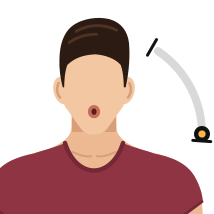
- Glide up and downSlide slowly from a comfortable low note to a comfortable high one and back, like a gentle siren.
- Hum a tune through itHum a simple tune through the straw, keeping the volume soft.
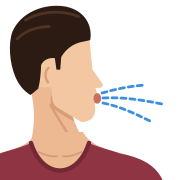
- Take it away and speakRemove the straw and say a sentence straight away with the same easy, buzzy feeling. No straw? Use small, rounded “oo” lips.
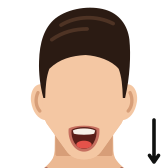
Your cue: Hum “ooo” through a straw. Glide gently up and down.
What it should feel like
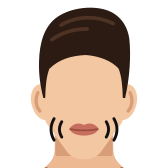
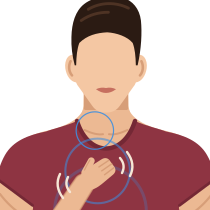
You should feel a light buzz around your lips and a gentle pressure in your mouth, while your throat feels easy and quiet. The sound will be small and muffled, and that’s normal. When you take the straw away, your voice often comes out with less effort and a little more ring. If your throat tightens, use less air and a softer sound.
Why it helps
Straw phonation is the best-known semi-occluded vocal tract (SOVT) exercise. “Semi-occluded” just means partly closed: the straw narrows the exit for the air, so pressure builds up in your mouth and just above the vocal folds. That pressure pushes back gently against the folds, so they can vibrate with a softer collision while your breath does more of the work (Hijleh and Pinto, Journal of Singing, 2021). Clinicians adjust the resistance by changing the straw’s length or width, or by putting the other end in water (ASHA).
The research is real but small. In a randomized controlled trial with 20 adults who had voice problems or vocal fatigue, therapy built on phonating through a tube improved how people rated their voice about as well as an established exercise program (Kapsner-Smith et al., 2015). Studies in the same Journal of Singing review found the pressure needed to start the voice dropped after five to ten minutes of straw work, though results vary between people. For healthy speakers, think of it as a reliable warm-up, not a transformation.
Straw in water is a popular variant: put the free end of the straw in a glass of water and phonate so it bubbles. The deeper the straw sits, the more resistance you get, and the bubbles show how much air you are using (Manternach, VOICEPrints, 2020). Keep to your own clean cup, straw and water, and never share them. It is the heart of the app’s Day 18 mission; see also the resonance exercises guide.
Common mistakes
- Air leaking through the nosePinch your nose for a moment: if the sound changes, air was escaping. All of it should go through the straw.
- Starting with a tiny strawVery narrow straws push back hard and can make you squeeze your throat. Move to a thinner straw only once a normal one feels easy.
- Puffing out the cheeksPuffed cheeks mean too much air. Use a softer, quieter sound until your cheeks stay relaxed.
- Big bubbles in waterAim for small, steady bubbles, not a boil: big bubbles mean too much air.
Make it easier or harder
Easier
Use a wider or shorter straw, or make the sound through small, rounded “oo” lips, with short glides in the middle of your range.
A step further
Hum a short song through the straw, or try a narrower straw or the water version, keeping the sound soft.
Safety: Stop if you feel light-headed, and rest between rounds. Use a clean straw, and in the water version your own cup and fresh water.
Where it fits
In the DEEP VOICE app, straw phonation is part of 3 ready-made warm-ups:
- Before a presentation (8 min): For a talk, a pitch or a toast: grounded, warm and clear.
- Resonance builder (7½ min): Find the buzz and move your voice out of your throat.
- Full voice workout (9 min): Breath, release, resonance and projection. The complete set.
Read more in Resonance exercises for your voice, Vocal warm-up for speaking and Voice projection exercises.
Questions people ask
What are the benefits of straw phonation?
It lets your voice work with less force at the vocal folds while your breath does more, which is why voice clinics use it for tired or strained voices. Small trials in people with voice problems found better voice quality and self-rated voice. A minute or two, a few times a day, is plenty.
How do you do straw phonation in water?
Fill a glass partway with water, put a straw in and make a soft “ooo” so it bubbles gently. Start with the end just under the surface, since deeper adds resistance, and use a bendable straw to keep your head level. Use your own straw, cup and water, and never share them.
What kind of straw should I use?
An ordinary drinking straw is the best start. Narrower or longer straws add resistance, but voice scientists suggest starting with medium resistance because very narrow straws can make people squeeze.
Can I do straw phonation without a straw?
Yes. Round your lips into a small “oo”, as if a straw were there, and glide gently up and down. It is a milder version of the same effect, handy on the go.
Sources
- Realizing the benefits of SOVTEs: a reflection on the research (Hijleh and Pinto, 2021), Journal of Singing, NATS
- A randomized controlled trial of two semi-occluded vocal tract voice therapy protocols (Kapsner-Smith et al., 2015), Journal of Speech, Language, and Hearing Research
- Straw in water: a low ‘spit factor’ alternative to lip trills and raspberries (Manternach, 2020), VOICEPrints, New York Singing Teachers’ Association (hosted by the University of Utah)
- Voice disorders: Practice Portal, American Speech-Language-Hearing Association (ASHA)
Your voice, safely
- Stay in your comfortable range. Never push your voice below what feels easy.
- No pressing on your throat or voice box, and no vocal fry or creak as a technique.
- Stop if it hurts or feels hoarse, scratchy or tired. Drink water and rest your voice.
- Hoarse for more than four weeks (sooner if you smoke), pain when you speak or trouble breathing? See an ENT doctor or a speech-language therapist.
These exercises are voice practice, not medical treatment. More on voice safety.