Tissue flow is a simplified version of flow phonation, a voice-therapy technique that trains easy, free airflow behind the voice. You blow a tissue into a steady flutter, keep that same flow while you add a soft “ooo”, count on it, and then take the tissue away. It helps a voice that feels squeezed or pressed find a lighter, freer way to work.
How to do tissue flow
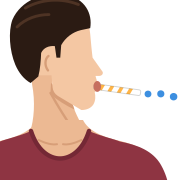
- Hold the tissue upHold a single tissue lightly by its top edge, about a hand’s width in front of your lips, so it hangs loosely. No tissue? Hold your palm there and feel the air on it.
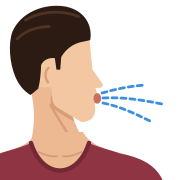
- Blow a steady flutterBreathe in low, then blow a gentle, even stream through rounded lips so the tissue lifts and flutters steadily for a few seconds. Aim for an even flutter, not a gust. Do this three or four times.
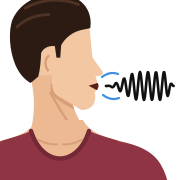
- Add a soft “ooo”Keep exactly the same airflow and add a soft, easy “ooo”. If the tissue falls still, your voice has started to hold the air back: ease off and blow again.
- Count on the airOn the same flow, count from one to ten, a few numbers per breath. Keep the tissue moving on every number.
- Take the tissue awayPut the tissue down and say the numbers or a short phrase like “How are you?” with the same airy, easy feeling, as if the tissue were still there.
- Rest between roundsTake a few normal breaths between rounds. Rest if you feel light-headed.
Your cue: Blow a tissue into a steady flutter, then add a soft “ooo”.
What it should feel like
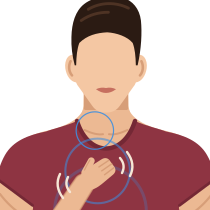
The tissue flutters evenly and keeps moving when your voice comes in. Your voice sounds soft and a little airy at first, and your throat feels open, as if the sound floats out on the breath instead of being pushed. When you take the tissue away, words come out with less effort than usual. If your neck tightens or the tissue drops on every word, slow down and go back to blowing without voice.
Why it helps
Flow phonation comes from voice therapy for people whose voices are pressed and effortful. ASHA’s practice portal on voice disorders describes it as a way to encourage more airflow, easier voicing and a sound that sits forward in the mouth. The tissue makes the airflow visible: when the throat squeezes, the flow drops and the tissue falls.
The steps here follow a randomized trial by Rangarathnam and colleagues (2023): blow the tissue, add voice, count, move on to short phrases starting with “h” and “wh”, and finally drop the tissue. The trial was small, 17 adults with muscle tension dysphonia, a voice problem caused by too much effort. Listeners rated their voices better after treatment, while acoustic and airflow measures didn’t change significantly. Promising, but early.
In the clinic, a speech-language therapist teaches and adjusts flow phonation, usually alongside other exercises; this is a simplified version for practice alone. It’s an airflow and relaxation exercise, not a way to change your pitch, and many people find it a good reset before a tense call or meeting. If your words tend to start with a hard click, pair it with easy onset.
Common mistakes
- Blowing too hardA gust makes the tissue jump and then die. Use a gentle, even stream you could keep up for several seconds.
- Tissue drops when you voiceIf the tissue stops when you add “ooo”, your throat is holding the air back. Make the sound softer and airier until the tissue keeps moving.
- Staying breathy afterwardsThe airy sound is a training step, not the goal. Once the tissue is gone, aim for an easy, clear voice that still feels light.
- Raising your shouldersLifted shoulders mean a high, tense breath. Let the breath drop low and keep your neck soft.
Make it easier or harder
Easier
Skip the voice for a few days and just keep the tissue, or the air on your palm, moving evenly. Then add a soft “ooo” for only a second or two at a time.
A step further
Use short phrases that start with “h” or “wh”, like “Who is it?” or “How was your day?”, first with the tissue and then without. Keep the same easy flow on every word.
Safety: Several rounds of blowing can make you light-headed, so take normal breaths in between and rest if you feel dizzy. Stop if your throat feels tight or sore.
Where it fits
In the DEEP VOICE app, tissue flow is part of this ready-made warm-up:
- Calm voice (6½ min): Slow your breath and soften a tight throat before something tense.
Read more in Speak from your diaphragm.
Questions people ask
What is flow phonation?
Flow phonation is a voice-therapy approach that trains you to voice on a free, steady stream of air instead of squeezing. Therapists often use a tissue, bubbles in a cup or other feedback so you can see the airflow. The full method is taught by a speech-language therapist; tissue flow is a simplified version for practice alone.
Why does my voice feel tight when I talk?
Often it’s too much effort and too little airflow: the throat closes down and pushes. Exercises like this one, easy onset and humming practice a lighter way to start and keep your voice going. If tightness comes with pain or hoarseness that lasts, see an ENT doctor or a speech-language therapist.
Can I do it without a tissue?
Yes. Hold your palm a few inches from your lips and feel the stream of air, or watch a strip of paper move. The idea is the same: keep the air flowing when your voice comes in.
Sources
- Voice disorders (Practice Portal), American Speech-Language-Hearing Association
- A randomized controlled trial of the effects of flow phonation voice treatment for primary muscle tension dysphonia, Journal of Communication Disorders (Rangarathnam et al., 2023)
Your voice, safely
- Stay in your comfortable range. Never push your voice below what feels easy.
- No pressing on your throat or voice box, and no vocal fry or creak as a technique.
- Stop if it hurts or feels hoarse, scratchy or tired. Drink water and rest your voice.
- Hoarse for more than four weeks (sooner if you smoke), pain when you speak or trouble breathing? See an ENT doctor or a speech-language therapist.
These exercises are voice practice, not medical treatment. More on voice safety.