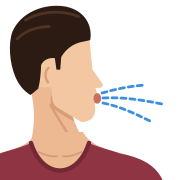
Vocal sirens are slow, smooth pitch glides on a soft “ng” (as in “sing”) or “ooo”, like a quiet siren. In this version you start on a comfortable high note and slide down to a comfortable low one. Sirens gently warm up your voice through its easy range, and gliding downward is also a classic way to settle the voice after heavy use.
How to do vocal sirens
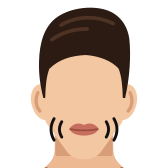
- Find the “ng” soundSay “sing” and hold the “ng” at the end: the back of your tongue rests against your soft palate and the sound comes through your nose. Keep your jaw loose and your lips slightly apart.
- Start on an easy high noteBreathe in low. Begin a soft “ng” on a note that is high but still comfortable, nowhere near a squeak.
- Glide slowly downSlide smoothly down to a comfortable low note over three or four seconds, with no steps or bumps, like a siren fading away.
- Stop before the bottomLet the glide end where your voice is still clear and easy. Never squeeze out the lowest note you can reach.
- Switch to “ooo”Repeat on a soft “ooo” with rounded lips, then try a gentle down-and-up wave on one breath.
- Rest and repeatTake a normal breath between glides. Five to eight slow sirens is plenty.
Your cue: Glide from an easy high note down to an easy low one on “ng”.
What it should feel like
A good siren feels like a smooth slide, not a staircase. On “ng” you should feel a buzz around your nose and the front of your face, and your throat should stay quiet and loose the whole way down. Small breaks or wobbles in the middle of your range are normal, especially in the morning. Keep the sound soft and they usually smooth out over a few glides.
Why it helps
Sirens move your voice through its range without words getting in the way. NHS speech and language therapists include glides on “ooo”, “ah”, “ee” and “ng” in voice warm-ups, and use gentle downward glides in a warm-down that helps loosen the muscles and return the voice box to its resting position (Royal Berkshire NHS). Another NHS leaflet uses quiet “ng” sirens and “woop” and “boom” glides to release tension in the throat (North Cumbria NHS).
The “ng” matters. Like a hum, it closes the mouth at the back and sends the sound through your nose, which gives you buzzy feedback and keeps the sound gentle. Pitch glides, up and down, are also part of Vocal Function Exercises, an established voice therapy program tested in a randomized trial (Kapsner-Smith et al., 2015). There is little research on sirens on their own, so treat them as a well-established warm-up rather than a proven fix for anything.
Why descending? Starting high and gliding down lets your voice settle into the relaxed lower part of its comfortable range, instead of reaching for a low note from below. The NHS warm-down leaflet notes that some singers’ speaking voices stay high after long stretches of high singing, and that a warm-down helps them settle. Sirens won’t lower your pitch; they remind your voice where easy is. You’ll find them in the app’s morning and resonance routines, and in the vocal warm-up for speaking guide.
Common mistakes
- Squeezing out the lowest noteThe glide should end while your voice is still clear. If it creaks or rattles, you went too far.
- Swooping too fastA quick swoop skips over the middle of your range. Take three or four seconds for each glide.
- Getting louder at the endsKeep the volume soft and even all the way. A volume spike at the top or bottom means you are pushing.
- Moving the chin with pitchKeep your head level as the pitch moves. Raising your chin for high notes or tucking it for low ones tightens the throat.
Make it easier or harder
Easier
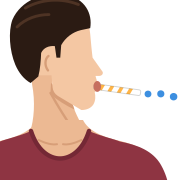
Glide over a smaller range, just a few notes, on a lip trill or through a straw, which keeps the effort low.
A step further
Make each glide slower and smoother, or do gentle waves (down, up a little, down further) on one breath, still inside your comfortable range.
Safety: Stay inside your easy range at both ends and keep the sound quiet. Stop if anything hurts, scratches or feels strained, and rest your voice.
Where it fits
In the DEEP VOICE app, vocal sirens is part of 3 ready-made warm-ups:
- Morning voice (6½ min): Wake a sleepy voice gently, without forcing it.
- Resonance builder (7½ min): Find the buzz and move your voice out of your throat.
- Full voice workout (9 min): Breath, release, resonance and projection. The complete set.
Read more in Resonance exercises for your voice and Vocal warm-up for speaking.
Questions people ask
What are the benefits of vocal sirens?
Sirens warm up your voice through its whole easy range, help smooth out breaks between low and high, and release throat tension. NHS voice therapists also use gentle downward glides as a warm-down after heavy voice use.
How do you do sirens as a vocal warm-up?
On a soft “ng” (as in “sing”) or “ooo”, glide smoothly from a comfortable high note to a comfortable low one, then back up if you like. Keep it quiet and slow, take a breath between glides, and do five to eight.
Should sirens go up or down?
Both are useful. Upward glides stretch the voice toward its higher range, while downward glides help it settle and relax. This version goes down so you finish in the relaxed lower part of your comfortable range, close to where you speak.
Why does my voice crack during sirens?
Small breaks are common where your voice changes gear, especially when it is cold or tired. Keep the siren soft, slow down through the break and stay well inside your range. If cracks come with pain or hoarseness that lasts, see a doctor or a speech-language therapist.
Sources
- Voice “warm up” and “warm down”, Royal Berkshire NHS Foundation Trust
- Speech and language: deconstriction, North Cumbria Integrated Care NHS Foundation Trust
- A randomized controlled trial of two semi-occluded vocal tract voice therapy protocols (Kapsner-Smith et al., 2015), Journal of Speech, Language, and Hearing Research
Your voice, safely
- Stay in your comfortable range. Never push your voice below what feels easy.
- No pressing on your throat or voice box, and no vocal fry or creak as a technique.
- Stop if it hurts or feels hoarse, scratchy or tired. Drink water and rest your voice.
- Hoarse for more than four weeks (sooner if you smoke), pain when you speak or trouble breathing? See an ENT doctor or a speech-language therapist.
These exercises are voice practice, not medical treatment. More on voice safety.