The short answer
Resonance exercises teach your voice to buzz easily instead of squeezing in your throat. Start with a gentle hum on a comfortable note until you feel vibration on your lips, then open the hum into vowels, words and sentences while keeping that buzz. Add a chest hum to feel warmth on the low notes of your easy range, and straw phonation or lip trills to make it effortless. Five to ten minutes a day is enough.
What resonance is, in plain words
Your vocal folds make a small buzzing sound. On its own it would be thin, like a guitar string without the guitar. Everything above the folds, your throat, mouth and nose, works like the guitar’s body: it shapes that buzz and decides how full, bright or muffled it sounds. That shaping is resonance.
The useful part is that you can change the shape. How open your throat is, how loose your jaw is, where your tongue rests and how your lips move all change the sound, even when your pitch stays exactly the same. That is why resonance is the most trainable part of a fuller, “deeper” voice. (For the whole picture, including what exercises can’t change, see deep voice exercises.)
You can’t see resonance, but you can feel it. When your voice resonates easily, you feel a buzz: on your lips and nose, in your cheeks, and on lower notes in your upper chest. These exercises use that buzz as a guide.
Chest resonance vs forward resonance
Chest resonance is the buzz you feel in your upper chest, mostly on the low notes of your comfortable range. It goes with a warm, relaxed, unhurried sound, which is why people link it with a deep voice.
Forward resonance, sometimes called “mask” resonance, is the buzz you feel on your lips, teeth, nose and cheekbones. It goes with a clear voice that carries without effort.
Two things are worth knowing. First, the vibration you feel in your chest is mostly feedback for you. A review of the research found that chest and head vibrations add little to the sound other people hear; the sound itself is shaped in the throat and mouth (Herbst, 2020). So the chest buzz is a sign that your voice is relaxed and sitting low in its easy range, not something to manufacture by pushing down. It also gets harder to feel as the note rises, which is normal. Second, the two aren’t rivals. A relaxed throat with a forward buzz usually gives you a voice that is clear and warm at the same time.
What about “chest voice”? In singing, chest voice is another name for the ordinary (modal) way your vocal folds vibrate on lower notes, the same mode everyday speech uses (Herbst, 2020). So for speaking, “chest voice exercises” really means making that everyday voice fuller and more relaxed, which is what the chest hum below does.
Why voice clinics train forward resonance
Speech-language therapists rarely start with the chest. They train what is called resonant voice: easy buzzing sensations in the front of the mouth and face, with as little effort as possible. ASHA describes the aim as the strongest, cleanest voice for the least effort (ASHA).
The reason is simple. When the buzz is forward, the vocal folds come together gently and efficiently, and the throat doesn’t have to squeeze to make the voice heard. NHS speech and language therapy leaflets use humming for exactly this: to relax the voice box, bring the vocal folds together gently and help people get louder without forcing (Cambridge University Hospitals; Royal Berkshire). Another NHS leaflet describes humming as moving the effort out of the throat and into the face and mouth (North Cumbria).
Straw phonation and lip trills belong to the same family, called semi-occluded vocal tract exercises: narrowing the outlet at the lips raises the air pressure above the vocal folds, which helps them vibrate with less impact (ASHA). They are standard in voice therapy, and straw work has been tested in a randomized trial (Kapsner-Smith et al., 2015).
For anyone who wants a fuller voice, a forward buzz is also the safe route to warmth. A forced “chest voice” pushed below your comfortable range does the opposite: it sounds swallowed and tires the throat.
The resonance exercise sequence: from hum to speech
This is the order NHS clinic leaflets use, adapted for practice on your own. Move on only when the step before feels easy. If the buzz disappears, go back one step.
- Find your easy note. Say “mm-hmm” as if agreeing with a friend. Notice the note and the buzz on your lips. That is your starting pitch (find your natural pitch).
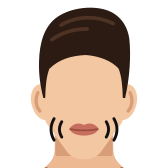
- Hum. Lips closed, teeth apart, jaw loose. Hum on that note for a few seconds, ten times, breathing in through your nose between hums. Aim for a tingle on your lips and around your nose. It won’t be loud.
- Slide. Let the hum glide gently up and down, staying in your easy range.
- Open into vowels. “Mmm-ah”, “mmm-ee”, “mmm-oh”. Go straight from the hum into the vowel with no gap, keeping the buzz.
- Words. Shorten the hum: “many”, “money”, “morning”, “more”. Then words that start with h or w, which also begin gently: “how”, “here”, “why”, “where”.
- Phrases. “Make it mine.” “Monday morning.” “Many more minutes.” If they come out sung, say them in your normal speaking voice.
- Chant to speech. Chant a sentence on one comfortable note, then say it normally with the same ease. Chant, speak, chant, speak.
- Conversation. Pick one call or chat a day and keep the buzz for the first few sentences.
-
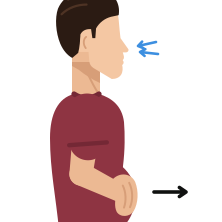
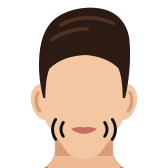 Mm-hmm: find your natural pitchSay a relaxed “mm-hmm”, like agreeing. That's your easy note.
-
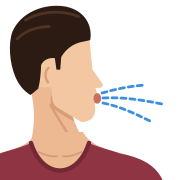
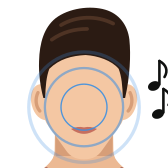 HummingLips closed, teeth apart. Hum and feel the buzz.
-
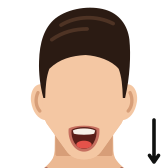
 Hum into vowelsHum “mmm”, then open into “ah”. Keep the buzz as you open.
-
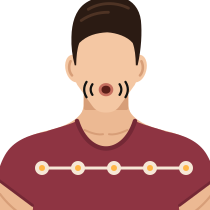 Chant to speechChant a sentence on one easy note, then say it with the same buzz.
Recording yourself helps more than you’d think: clinic leaflets suggest it, because you hear what is really happening. And don’t practice while driving: your attention belongs on the road.
Chest resonance exercises, without pushing down
Once the forward buzz is easy, add warmth. These exercises let you feel chest resonance on notes that stay comfortable.
- Chest hum: rest a hand flat on your upper chest and hum “mmm” on a comfortable low note, never below what feels easy. Slide a little until the buzz under your hand is strongest without effort, then say “morning” on that note.
- Descending sirens: on a soft “ng”, glide from an easy high note to an easy low one, like a slow siren. It connects your range and lands you gently at the bottom of your comfortable zone, without squeezing out the last note.
- Yawn–sigh: start a yawn, feel the back of the throat widen, then sigh out softly. Open space in the throat is where warmth comes from.
- Vowel stretch: slow, open vowels with a dropped jaw give the sound room.
-
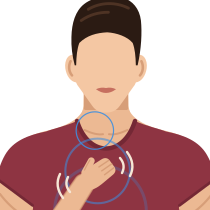 Chest humHand on your chest. Hum a comfortable low note and feel it buzz.
-
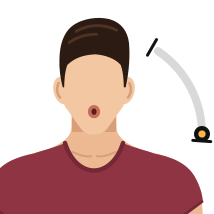 Vocal sirensGlide from an easy high note down to an easy low one on “ng”.
-
 Yawn–sighStart a yawn, then sigh out gently from high to low.
-
 Vowel stretchA · E · I · O · U. Open, round and unhurried.
The test is always the same: if your throat feels tight or scratchy, or the sound turns gravelly, you’ve gone below your easy range. Come back up until it feels effortless.
How to tell resonance exercises are working
Signs you’re on track:
- You feel a tingle or buzz on your lips and nose, and on low comfortable notes, under your hand on your chest.
- Your voice feels easier: less effort for the same volume.
- You can speak a little louder without your throat tightening.
- After a long call, your voice is less tired than it used to be.
- On a recording, your voice sounds clearer and fuller, less pinched or muffled.
Signs to back off: a tickle or scratch, the urge to clear your throat, a pressed or swallowed sound, or hoarseness afterwards. Go back to a gentle hum, softer and a little higher in your easy range, and rest if it doesn’t settle. Hoarse for more than four weeks (sooner if you smoke), pain when speaking or trouble breathing: see an ENT doctor or a speech-language therapist.
Record the same short paragraph once a week. Resonance changes are much easier to hear side by side than from one day to the next.
A daily resonance routine
The resonance builder routine in DEEP VOICE puts the whole sequence on a timer: about eight minutes of exercises, closer to ten with short rests. Do it once a day, ideally shortly before you talk to people, so you carry the buzz straight into real speech.
Resonance builder
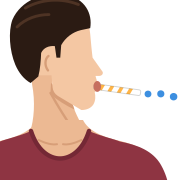
7½ minFind the buzz and move your voice out of your throat.
- Mm-hmm: find your natural pitch50 s
- Humming60 s
- Hum into vowels60 s
- Chest hum60 s
- Straw phonation60 s
- Vowel stretch60 s
- Vocal sirens50 s
- Chant to speech60 s
Straw phonation, a soft “ooo” through a drinking straw gliding up and down, is the one to keep for tired days: a minute of it often makes the voice feel lighter. Lip trills aren’t in this routine but do something similar with no equipment.
Week 3 of the challenge: find your resonance
In the DEEP VOICE challenge, resonance gets a whole week, right after a week of breathing low, so the buzz has steady air under it. Week 3 goes like this:
- Day 15, find your easy note: use “mm-hmm” to find it, then start ten short phrases from it.
- Day 16, hum into words: ten minutes from humming to words to sentences, keeping the buzz.
- Day 17, open throat: five yawn–sighs, then a page read aloud with the same open feeling.
- Day 18, straw time: five minutes of straw phonation, then speak straight away and notice the difference.
- Day 19, read with pauses: resonance and pace together, recorded.
- Day 20, checkpoint: record the Day 1 text again and listen to Day 1, Day 10 and today in order.
- Day 21, review: where your voice lives now, and when it slips back into your throat.
Each day is a real-life mission, not only an exercise, which is what turns resonance into the way you talk. Breathing comes first for a reason: see how to speak from your diaphragm. All 90 missions are on the challenge page.
Questions people ask
What are chest resonance exercises?
They are exercises that let you feel your voice buzz in your upper chest, such as humming with a hand on your chest, slow descending sirens and yawn–sighs. Keep them on a comfortable note. The buzz comes from a relaxed voice, not from forcing it down.
What is forward resonance?
Forward resonance is a voice you feel buzzing on your lips, teeth, nose and cheekbones. Voice therapists train it because it lets the voice carry with less effort in the throat. Humming, words starting with m and straw phonation are the usual ways in.
Is chest voice the same as chest resonance?
Not quite. Chest voice is the ordinary way your vocal folds vibrate on lower notes, and everyday speech already uses it. Chest resonance is the buzz you feel in your chest when that voice is relaxed and in the low part of your easy range.
Can resonance exercises make my voice deeper?
They won’t change your pitch range. They can make your voice sound fuller, warmer and more relaxed, which most listeners hear as deeper. Pair them with low breathing and a slower pace for the biggest difference.
How long do resonance exercises take to work?
Your voice usually feels easier within a single session. Hearing a steady change in recordings, and keeping the buzz in everyday conversation, takes a few weeks of short daily practice.
Your voice, safely
- Stay in your comfortable range. Never push your voice below what feels easy.
- No pressing on your throat or voice box, and no vocal fry or creak as a technique.
- Stop if it hurts or feels hoarse, scratchy or tired. Drink water and rest your voice.
- Hoarse for more than four weeks (sooner if you smoke), pain when you speak or trouble breathing? See an ENT doctor or a speech-language therapist.
These exercises are voice practice, not medical treatment. More on voice safety.
Sources
- Practice Portal: Voice Disorders, American Speech-Language-Hearing Association (ASHA)
- Humming exercises, Cambridge University Hospitals NHS Foundation Trust
- Reducing vocal tension using humming exercises and lip trills, Royal Berkshire NHS Foundation Trust
- Speech and Language: Humming, North Cumbria Integrated Care NHS Foundation Trust
- Registers: The Snake Pit of Voice Pedagogy, Part 1 (Herbst, 2020), Journal of Singing, NATS
- A Randomized Controlled Trial of Two Semi-Occluded Vocal Tract Voice Therapy Protocols (Kapsner-Smith et al., 2015), Journal of Speech, Language, and Hearing Research