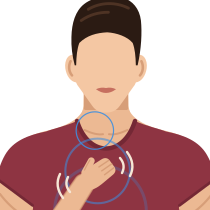
The yawn–sigh is a voice therapy technique: you start a yawn to widen the back of your throat, then let the air out on a soft, breathy sigh that slides from a comfortable high note to a comfortable low one. It uses your body’s natural yawning and sighing to relax a tight, effortful voice. It opens and eases the voice; it isn’t a way to make it lower.
How to do yawn–sigh
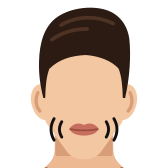
- Loosen shoulders and jawSit or stand tall, shoulders low, jaw loose and teeth apart.
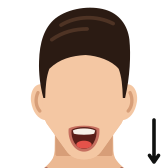
- Begin a yawnStart to yawn and feel the back of your throat widen and lift. You don’t need a full, jaw-stretching yawn: the first part is enough.
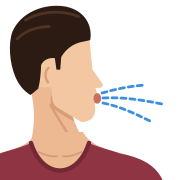
- Sigh it outAs the yawn opens, let the air out on a gentle “haaah” that starts on an easy, higher note and slides down through your easy range.
- Keep it soft and breathyThe sigh should sound like relief, not a groan. Let it fade out well before you run out of air.
- Rest and repeatBreathe normally for a moment, then repeat four or five times.
- Carry it into wordsKeep the open feeling and sigh out words that start with “h”: “who”, “how”, “hello”, “home”.
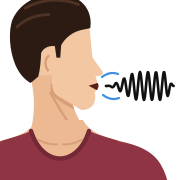
Your cue: Start a yawn, then sigh out gently from high to low.
What it should feel like
The back of your throat feels wide and cool, as it does at the start of a real yawn. The sigh is easy and slightly breathy, sliding down without any catch, push or scratch. Afterward your voice should feel looser and words may come out with less effort. If the bottom of the sigh turns into a croak or a creak, stop the slide earlier.
Why it helps
ASHA, the American Speech-Language-Hearing Association, lists the yawn–sigh among voice therapy techniques for an overworked, effortful voice: it borrows the natural actions of yawning and sighing to lower the larynx (voice box) and widen the space above the vocal folds, encouraging a more relaxed sound. NHS voice services use it in vocal tract relaxation exercises, building from gentle sighs to words and short phrases that start with “h” (Dorset County Hospital).
What it doesn’t do is make your voice deeper. In a small 2017 pilot study, healthy speakers who practiced the yawn–sigh over 18 weeks ended up with a slightly higher average pitch, along with some signs of a clearer voice (Meerschman et al., 2017). So use it for ease and openness. A relaxed, open throat can make your voice sound warmer, but the pitch your anatomy gives you stays where it is. If a deeper-sounding voice is your goal, read how to get a deeper, fuller voice.
The opening comes from the back of the throat, not from cranking the jaw. If your jaw is sensitive, keep the yawn small: NHS advice for jaw joint problems includes not yawning too wide. In DEEP VOICE it appears in five routines, from the Pre-mission warm-up to the One-minute reset, and pairs naturally with easy onset and lip trills.
Common mistakes
- Pushing the sighA loud, forced sigh adds the tension you’re trying to release. Keep it soft and breathy.
- Sliding down into a creakStop the slide at a comfortable low note. Grinding into a creaky, fry-like sound at the bottom strains the voice.
- Forcing a huge yawnA wide-open jaw isn’t needed. The start of a yawn opens the throat; let the jaw stay easy.
- Using it to sound lowerIt’s for ease and openness. Don’t try to hang on to the bottom note or speak down there.
Make it easier or harder
Easier
Do a silent version: start the yawn, then let the air out on a quiet sigh with no voice, feeling your throat stay wide.
A step further
After a few sighs, keep the same open, easy feeling and say short phrases that start with “h”, like “how are you” and “happy to help”, then a sentence without an “h” start.
Safety: Keep the sigh soft and stop before the very bottom of your range: never grind into vocal fry. If your jaw clicks or aches, keep the yawn small, and stop if your throat feels scratchy or hoarse.
Where it fits
In the DEEP VOICE app, yawn–sigh is part of 5 ready-made warm-ups:
- Pre-mission warm-up (5½ min): 5½ minutes of breath, release and resonance before today's mission.
- Morning voice (6½ min): Wake a sleepy voice gently, without forcing it.
- Calm voice (6½ min): Slow your breath and soften a tight throat before something tense.
- Tension release (7 min): Unclench jaw, tongue, neck and shoulders.
- One-minute reset (1 min): Voice tight or rushing? Sixty seconds back to low and slow.
Read more in Deep voice exercises, Resonance exercises for your voice and Vocal warm-up for speaking.
Questions people ask
What is the yawn sigh technique?
It’s a voice therapy exercise in which you start a yawn to open the throat, then sigh out on a soft, falling “haaah”. Speech-language therapists use it to reduce effort and tension in the voice, and it’s also a common gentle warm-up.
Does the yawn sigh make your voice deeper?
No. It relaxes and opens the throat, which can make your voice sound warmer, but it doesn’t lower your natural pitch. In a small pilot study it actually raised average pitch slightly.
Is the yawn sigh good before public speaking?
Yes, as part of a warm-up. A few soft yawn–sighs release tension in the throat and jaw, and sighing into words that start with “h” helps you begin speaking without a hard, tight start.
How many times should I do a yawn sigh?
Four or five gentle repeats, about 50 seconds, is enough for a warm-up. You can repeat it during the day whenever your voice feels tight, as long as it stays easy.
Sources
- Voice disorders (Practice Portal), American Speech-Language-Hearing Association (ASHA)
- Vocal tract relaxation exercises, Dorset County Hospital NHS Foundation Trust
- Effect of two isolated vocal facilitating techniques glottal fry and yawn-sigh on the phonation of female speech-language pathology students: a pilot study (Meerschman et al., Journal of Communication Disorders, 2017), Journal of Communication Disorders
- Temporomandibular disorder (TMD), NHS
Your voice, safely
- Stay in your comfortable range. Never push your voice below what feels easy.
- No pressing on your throat or voice box, and no vocal fry or creak as a technique.
- Stop if it hurts or feels hoarse, scratchy or tired. Drink water and rest your voice.
- Hoarse for more than four weeks (sooner if you smoke), pain when you speak or trouble breathing? See an ENT doctor or a speech-language therapist.
These exercises are voice practice, not medical treatment. More on voice safety.