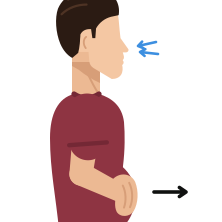
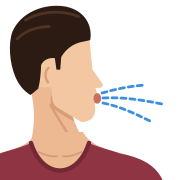
The slow count is a pacing exercise: you count to ten out loud in pairs, “one, two”, then pause and take an easy breath before “three, four”. Each number lands fully before the next. It trains the habit that makes a voice sound calm and confident: short phrases, real pauses and a fresh breath before you run out, instead of rushing to the end.
How to do slow count
- Sit or stand tallLet your shoulders drop and rest a hand on your belly so you can feel your breathing.
- Breathe in lowTake an easy breath through your nose and feel your belly move out under your hand.
- Say the first pairSay “one, two” on a comfortable note, clearly and without hurrying. Let “two” finish fully before you stop.
- Pause and breatheClose your mouth, pause for about a second and let a small, quiet breath drop in. No gasping and no “um”.
- Continue to tenCarry on: “three, four”, pause, “five, six”, pause, all the way to ten. Keep the same pace and loudness for every pair.
- Stretch the phrasesOn the next round, try three numbers per breath. Then switch to a real sentence: one short phrase, pause, breathe, next phrase.
Your cue: Count to 10 in pairs. Pause and breathe after every two.
What it should feel like
It will feel slower than normal, maybe uncomfortably so. That’s the point: a pause that feels long to you often sounds natural to the person listening. Your breathing should feel easy and low, never gulped or held. Each number should sound complete and settled, especially the second of each pair, and you should never feel short of air.
Why it helps
Rushing and running out of breath go together: you squeeze out the last words on empty, and your voice tightens. NHS voice leaflets advise taking regular breaths when you speak, especially at the ends of sentences, so you never get out of breath (Royal Berkshire NHS). Counting in pairs turns that into a habit: every short phrase gets its own breath, and the breath comes from low in your body, not your shoulders.
How many words you say on one breath is something voice therapists train directly: an expert consensus on voice therapy lists breath-group length among its targets (Van Stan et al., 2021). Counting on the out-breath, with a brief pause before each new breath, is a standard NHS breathing exercise (North Cumbria NHS), and slowing down with clear spaces between words is basic speech-therapy advice for being understood (West Suffolk NHS).
There is little research on this exact drill, but the skill it trains runs through the app’s Week 4, “Slow down”, which opens with one thought per breath. A slower, paused delivery is also a big part of sounding calm and sure of yourself. For more, see how to speak slower and how to sound more confident.
Common mistakes
- Gasping at every pauseThe breath should be small and quiet. You only need enough air for the next two numbers.
- Filling pauses with “um”Close your mouth during the pause. The silence is the exercise.
- Letting numbers trail offKeep the last number of each pair as clear and full as the first, then stop.
- Speeding up toward tenMost people accelerate as they go. Keep the same steady rhythm from one to ten.
Make it easier or harder
Easier
Pause and breathe after every single number, or count silently on the out-breath first to feel the rhythm before adding your voice.
A step further
Read a paragraph aloud with a pause and a breath at every comma and period, or tell a short story out loud, one phrase per breath.
Safety: Keep every breath small and easy, and stop to breathe normally if you feel light-headed or dizzy.
Where it fits
In the DEEP VOICE app, slow count is part of 3 ready-made warm-ups:
- Pre-mission warm-up (5½ min): 5½ minutes of breath, release and resonance before today's mission.
- Before a call (6½ min): A warm, steady voice for the phone or a video call.
- Before a presentation (8 min): For a talk, a pitch or a toast: grounded, warm and clear.
Read more in Deep voice exercises, Vocal warm-up for speaking and How to speak slower.
Questions people ask
How can I speak slower and more clearly?
Break your speech into short phrases with a real pause and a small breath between them, and let the last word of each phrase finish fully. The slow count trains that rhythm on numbers first, so it is easier to use in conversation. Crisp consonants help too.
How do I stop talking fast when I’m nervous?
Nerves speed up breathing and speech together. Before you speak, take one slow, low breath, then use short phrases with pauses, as in this exercise. A pause gives you time to think and sounds more confident than rushing.
How long should a pause be?
In conversation, about a second is enough for a breath and for your words to land. It will feel longer to you than to your listener. Practice with the slow count until that pause feels normal.
Is this the same as breathing from the diaphragm?
It uses the same low breathing, but the focus is on timing: when to breathe and how much to say on each breath. For the breathing itself, start with belly breathing.
Sources
- Voice care tips for a healthy voice, Royal Berkshire NHS Foundation Trust
- Speech and language: diaphragmatic breathing, North Cumbria Integrated Care NHS Foundation Trust
- Strategies for clearer speech, West Suffolk NHS Foundation Trust
- Voice therapy according to the Rehabilitation Treatment Specification System: expert consensus ingredients and targets (Van Stan et al., 2021), American Journal of Speech-Language Pathology
Your voice, safely
- Stay in your comfortable range. Never push your voice below what feels easy.
- No pressing on your throat or voice box, and no vocal fry or creak as a technique.
- Stop if it hurts or feels hoarse, scratchy or tired. Drink water and rest your voice.
- Hoarse for more than four weeks (sooner if you smoke), pain when you speak or trouble breathing? See an ENT doctor or a speech-language therapist.
These exercises are voice practice, not medical treatment. More on voice safety.