The short answer
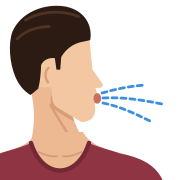
To sound more confident when speaking, finish your sentences and let statements end on a falling note, replace “um” with a short silent pause, and keep your pace and volume steady to the last word. Let your voice settle at the comfortable lower part of its range instead of rising with nerves, but don’t push it down. A low breath before you start makes all of this easier. Practice in low-stakes moments so it holds under pressure.
What makes a voice sound confident
Researchers study this by recording people speaking with confidence or with doubt, then asking listeners to rate them. A 2021 review of that work found a fairly consistent picture. Listeners hear more confidence when statements end with a falling rather than a rising pitch, when the voice is lower rather than higher, when there are fewer pauses, and when the pace is fluent and reasonably brisk rather than slow and halting. Very fast speech, though, made messages harder to follow. In brain-recording studies, listeners began telling a confident tone from a doubtful one within about a fifth of a second.
Two honest caveats. First, these are mostly lab studies with actors, scripted sentences and North American English, so treat them as tendencies, not rules. Loudness shows why: some studies found confident speakers louder, while one set of recordings found them slightly quieter and more even. Second, listeners also weigh what you say. A confident voice can’t rescue a muddled message, and a clear message in a slightly nervous voice usually lands fine.
Put together, the cues worth practicing are:
- Statements that end down. “I’ll send it tomorrow,” with the last word stepping down, not rising like a question.
- Finished sentences. No trailing off into “…so, yeah,” and no fading to a mumble on the last words.
- Pauses instead of fillers. Hesitation is what sounds unsure: the “um”, the restart, the stop in the middle of a phrase. A short silence at the end of a finished thought is different. Speaking coaches recommend it, though it has been studied less.
- A steady pace you choose. Not rushed to get it over with, not dragged out. If rushing is your problem, see how to speak slower.
- Steady volume. The same easy level from the first word to the last. Steady, not loud.
- A relaxed pitch. The note your voice sits on when you’re at ease, which is usually lower than the one it jumps to when you’re nervous.
Lower pitch, or relaxed pitch?
Because lower voices are often rated as more confident, plenty of advice says “just speak lower”. That backfires. How high or low your voice sits depends mostly on anatomy, such as the length and mass of your vocal folds, and no exercise changes that. Pushing your voice below its easy range tightens your throat, slides into creaky vocal fry, sounds put on, and tires the voice fast.
What you can change is the tension that drags your pitch up. Nerves tighten your jaw, tongue, neck and breathing, and the voice rises and thins with them. When those let go, the voice settles back to its natural place, often a little lower and fuller than your nervous voice. To find that place, say a relaxed “mm-hmm”, as if casually agreeing with a friend, and slide straight into a word on the same note. That’s your target: comfortable, not pushed. The guide to a deeper, fuller voice explains what resonance can and can’t do.
Exercises for a more confident-sounding voice
Ten minutes a day, or pick two before a call. Record yourself at the start of the week and again at the end.
- Find your easy note (1 minute). Mm-hmm, then “mm-hmm… morning” and “mm-hmm… my name is…”.
- Feel the buzz (1 minute). Chest hum: a hand flat on your upper chest, hum on a comfortable note, then say “morning” on it.
- Steady and connected (1 minute). Chant to speech: chant “I’d like to make a suggestion” on one easy note, then say it normally with the same smooth flow. In a small pilot study, chant talk slightly raised average pitch, so think of it as practice for ease and steadiness, not for sounding deeper.
- Falling endings (2 minutes). Say three statements and let the last word step down: “I’ll call you tomorrow.” “The deadline is Friday.” “I disagree.” Record them, and if they rise like questions, say them again. Real questions can keep rising.
- Finish the phrase (2 minutes). Phrase by phrase: one phrase per breath, ending each with air to spare so the last word is as clear as the first.
- The filler swap (2 minutes). Record yourself talking for one minute about your day. Whenever you feel an “um” coming, close your mouth, breathe, and wait for the next word. Count the fillers on playback, then do it again.
- A soft start (1 minute). Easy onset: begin vowel-first words gently, with no click or bump in the throat. Nervous speakers often bang into their first word.
-
 Mm-hmm: find your natural pitchSay a relaxed “mm-hmm”, like agreeing. That's your easy note.
-
 Chest humHand on your chest. Hum a comfortable low note and feel it buzz.
-
 Chant to speechChant a sentence on one easy note, then say it with the same buzz.
-
 Phrase by phraseOne phrase per breath. Pause, breathe low, then say the next.
-
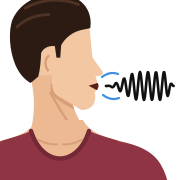 Easy onsetStart each word on a whisper of air: h-apple, h-every, h-open.
Falling endings and the filler swap are Days 23 and 24 of the 30-day challenge.
How to sound confident on the phone, on video, in meetings and interviews
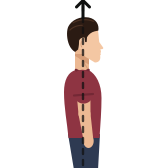
On the phone. Your voice is all they get, so small things show. Stand up or sit tall, take a low breath before you answer, and give a slow, clear greeting with your name. Keep notes in front of you so you aren’t searching for words, and let your statements end down. If you dread a call, do the one-minute reset below and dial before you can talk yourself out of it.
On video. Get the microphone close and wear headphones so you don’t raise your voice to hear yourself; speak at a normal volume and let the microphone do the work. Look at the camera, not your own face, for key sentences. Because of lag, leave a beat before you start and after you finish, so people don’t talk over you.
In meetings. Breathe before you come in, then put your point in the first sentence. Skip the apologetic run-up (“This might be a silly question, but…”). Say one thought per breath and end it down. If someone interrupts, finish your sentence at the same calm volume: “Let me just finish this thought.” Speaking early is usually easier than waiting for the perfect moment.
In an interview. A pause before you answer sounds like thinking, not doubt, so take one low breath first. Rehearse the openings of your key answers out loud the day before. When you’ve made your point, stop: answers that trail off into “…so, yeah, that’s about it” sound less sure than ones that simply end. A sip of water is always allowed.
When presenting. Warm up first (the vocal warm-up for speaking has a five-minute routine), know your opening line cold, and pause after each key point. To reach the back of the room without pushing, see voice projection exercises.
What to do when nerves hit mid-sentence
Your heart races, your breath goes high, and your voice climbs and speeds up. It happens to experienced speakers too. What helps is a small, practiced reset that looks like an ordinary pause:
- Get to the next full stop. Finish the sentence you’re in, even if it’s short, rather than stopping mid-word.
- Breathe out first. Let the air go, then let the next breath drop in low by itself. A long out-breath helps more than a big gasp in.
- Drop your shoulders and unclench your jaw. One second each. Nobody will notice.
- Restart smaller. A short, simple sentence, a little slower, ending down: “So, the main point is this.”
- Use the water. Taking a sip is a natural pause that buys you a few more seconds.
To you the pause feels long. To your listeners it sounds like someone gathering their thoughts. Before a stressful call or meeting, do the One-minute reset somewhere quiet: a slow exhale, a yawn-sigh and a chest hum. With more time, the app’s Calm voice routine is a longer option: box breathing, a slow exhale, tissue flow, shoulder and neck release, a yawn-sigh and easy onset.
One-minute reset
1 minVoice tight or rushing? Sixty seconds back to low and slow.
- Slow exhale30 s
- Yawn–sigh15 s
- Chest hum15 s
Practice under pressure: Weeks 5 and 8 of the challenge
Confident habits stick when you use them where they’re hardest to use. Two weeks of the challenge are built for exactly that.
Week 5, “Steady under pressure”: take one low breath before every answer for a day, make the phone call you’ve been putting off (after the One-minute reset), keep your slow pace when you’re rushed, disagree calmly with falling endings, read at your calm pace with your heart racing after climbing stairs, and say a steady “no” in one or two sentences.
Week 8, “On the phone and on camera”: answer every call with a slow, clear greeting, set up your video calls, send a 60-second voice note with two pauses, leave a voicemail someone could act on after one listen, record a two-minute “podcast”, then speak for a minute straight to camera.
Both weeks are in the 60- and 90-day challenges and build on the first 30 days. Open the free web app to start.
Questions people ask
How can I sound more confident on the phone?
Stand or sit tall, take a low breath before you answer, and give a slow, clear greeting with your name. Keep notes in front of you, finish your sentences, and let statements end on a falling note. Pause instead of filling silences with “um”.
How do I sound more confident in meetings?
Breathe before you speak, put your main point in your first sentence, and skip apologetic openers. Say one thought per breath, end statements down, and if you’re interrupted, finish your sentence calmly. Speaking early is easier than waiting for the perfect moment.
How do I sound confident in an interview when I’m nervous?
Take one low breath before each answer, because a short pause sounds like thinking. Rehearse the first lines of your key answers out loud beforehand, and stop cleanly when you’ve made your point. If nerves spike, finish the sentence, breathe out, and restart with a short one.
Does a deeper voice sound more confident?
In listening studies, lower voices are often rated as more confident, but pushing your voice down sounds forced and strains it. Your pitch range is set mostly by anatomy. What you can do is relax the tension that pushes your pitch up when you’re nervous, so your voice settles at its natural, comfortable level.
How do I stop saying “um” so much?
Notice the moment an “um” is coming, close your mouth, breathe, and wait for the next word. Record a one-minute talk, count the fillers, and repeat it. A silent pause does the same job as a filler and sounds much calmer.
Your voice, safely
- Stay in your comfortable range. Never push your voice below what feels easy.
- No pressing on your throat or voice box, and no vocal fry or creak as a technique.
- Stop if it hurts or feels hoarse, scratchy or tired. Drink water and rest your voice.
- Hoarse for more than four weeks (sooner if you smoke), pain when you speak or trouble breathing? See an ENT doctor or a speech-language therapist.
These exercises are voice practice, not medical treatment. More on voice safety.
Sources
- Paralinguistic features communicated through voice can affect appraisals of confidence and evaluative judgments (Guyer et al., 2021), Journal of Nonverbal Behavior (PMC)
- The voice of confidence: how listeners decode a “feeling of knowing” (Jiang, 2016), Society for Personality and Social Psychology
- Effect of two isolated vocal-facilitating techniques, chant talk and pitch inflections: a pilot study (Meerschman et al., 2016), Journal of Voice (PubMed)
- How to quit talking quickly, Toastmaster magazine, Toastmasters International
- Voice care tips for a healthy voice, Royal Berkshire NHS Foundation Trust