Phrase by phrase is a pacing and breathing exercise. You say a sentence that grows one phrase at a time, taking a low breath at every pause and finishing each phrase with air to spare. It trains you to speak in breath groups, chunks of words that fit easily on one breath, so your sentences stop fading out and you sound calm and unhurried.
How to do phrase by phrase
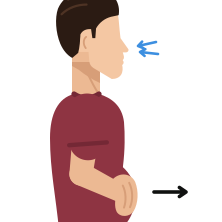
- Breathe in lowStand or sit tall with one hand on your belly. Take a quiet breath through your nose and feel your belly move out.
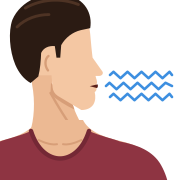
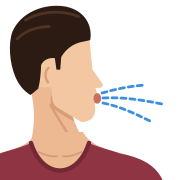
- Say the first phraseSay “I walked.” and stop. Notice that you still have plenty of air.
- Breathe, then grow itBreathe in low again, then say “I walked to the station.” Pause and breathe.
- Keep adding phrasesThen “I walked to the station in the rain.” and “I walked to the station in the rain with my brother.” Breathe at each pause, never in a gasp mid-phrase.
- Finish with air to spareStop every phrase before you run out. If the last words get quiet, tight or creaky, the phrase was too long for one breath: split it.
- Try it on real textRead a few lines of anything, one phrase per breath, breathing at commas and full stops. Keep the pauses calm.
Your cue: One phrase per breath. Pause, breathe low, then say the next.
What it should feel like
Each phrase feels supported from the first word to the last, with no squeeze at the end. The pauses feel natural, like a speaker in no hurry, not like gasps for air. Your belly moves gently with each breath while your shoulders stay still. When you listen back, the ends of your sentences sound as full as the beginnings.
Why it helps
Many people try to say too much on one breath. They run out of air, push the last words out with the throat, then snatch a quick, high breath to keep going. It sounds rushed and tense, and sentence endings fade. Breath groups fix the order: breath first, then words, then a pause. The Royal Berkshire NHS breathing leaflet uses a sentence that grows longer line by line, asks you to mark where you need a breath, and suggests slowing down so you can pause and top up.
Voice therapists treat breath-group length as a skill to train, not a fixed trait: an expert consensus on voice therapy ingredients and targets includes it among the things therapy can work on. There’s little research on this exact drill on its own, but it’s simple, low-risk and close to what clinics use. The practice sentences here are our own.
Phrasing also changes how you come across. Pauses give listeners time to take in what you said and give you time to breathe low, which is a big part of a calm, grounded voice. The DEEP VOICE challenge builds on it on Day 22, One thought, one breath, and on Day 63, Breath marks, when you plan the breaths in a talk. For more on pace, see how to speak slower and clearer.
Common mistakes
- Squeezing out the last wordsIf you’re pushing to finish, the phrase is too long. Split it and breathe sooner.
- Gasping between phrasesA quick, noisy breath goes high into the chest. Let a small, quiet breath drop low, then start.
- Pausing in odd placesBreathe where the meaning pauses: at commas, full stops and between ideas, not in the middle of a name or a phrase.
- Rushing the pausesA pause that feels long to you usually sounds natural to a listener. Give each one a calm second.
Make it easier or harder
Easier
Stay with three short phrases, like “I walked”, “I walked home” and “I walked home slowly”, and focus only on breathing low at each pause.
A step further
Mark the breaths in a paragraph with a pencil, then read it aloud breathing only at your marks. Then read it again at your normal pace, keeping the low breaths.
Safety: Take small, easy breaths rather than big gulps, and rest if you feel dizzy. Stop each phrase before you run out of air instead of squeezing out the last words.
Where it fits
In the DEEP VOICE app, phrase by phrase is part of this ready-made warm-up:
- Breath support (6 min): Breathe low so your voice has something to stand on.
Read more in Speak from your diaphragm, Sound more confident when you speak and How to speak slower.
Questions people ask
Why do I run out of breath when I talk?
Usually because you’re packing too many words into one breath, often while speaking fast and breathing high in the chest. Shorter phrases, a low breath at each pause and a slightly slower pace usually fix it. If you’re short of breath at rest, or it’s getting worse, see a doctor.
What is a breath group in speech?
It’s the stretch of words you say on one breath, between two pauses. Comfortable breath groups follow the meaning of what you’re saying, so the pauses fall in natural places.
How do I speak slower without sounding strange?
Don’t stretch every word; add pauses between phrases instead. One phrase per breath slows you down naturally, and listeners hear it as calm and confident rather than slow.
How do I stop my voice fading at the end of sentences?
Fading usually means the air ran out. Breathe at every full stop so each sentence starts with enough air to finish, and keep sentences shorter when you’re nervous.
Sources
- Abdominal breathing, Royal Berkshire NHS Foundation Trust
- Voice therapy according to the Rehabilitation Treatment Specification System: expert consensus ingredients and targets, American Journal of Speech-Language Pathology (Van Stan et al., 2021)
Your voice, safely
- Stay in your comfortable range. Never push your voice below what feels easy.
- No pressing on your throat or voice box, and no vocal fry or creak as a technique.
- Stop if it hurts or feels hoarse, scratchy or tired. Drink water and rest your voice.
- Hoarse for more than four weeks (sooner if you smoke), pain when you speak or trouble breathing? See an ENT doctor or a speech-language therapist.
These exercises are voice practice, not medical treatment. More on voice safety.