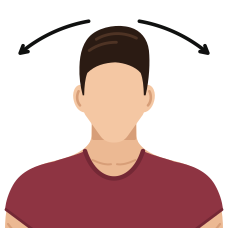
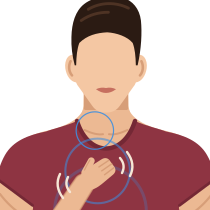
Shoulder rolls are slow circles of the shoulders: up toward your ears, back, then down and let go. They loosen the muscles across the top of your shoulders and the base of your neck, where stress and long hours at a desk tend to collect. Releasing that tension before you speak makes it easier to breathe low and keeps the effort away from your throat.
How to do shoulder rolls
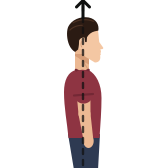
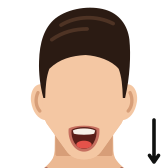
- Stand or sit tallFeet flat, arms hanging loose at your sides, chin level. Let your jaw rest with your teeth slightly apart.
- Lift toward your earsSlowly raise both shoulders toward your ears, like a shrug in slow motion, breathing in as they rise.
- Roll them backDraw your shoulders gently backward, letting the front of your chest open a little.
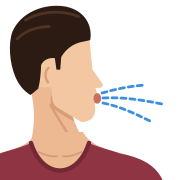
- Let them dropBreathe out and let your shoulders sink down, heavier than where they started. Feel the weight of your arms.
- Repeat, then reverseMake five or six slow circles, then reverse the direction for a few more. Only the shoulders move: your elbows, head and jaw stay quiet.
- Shake outLet your arms hang and shake your hands loosely for a few seconds.
Your cue: Roll your shoulders up, back and down. Slowly.
What it should feel like
Slow, smooth and a little satisfying, like a stretch after sleep. The drop is the important part: on each out-breath your shoulders should settle a bit lower, as if you were putting down a heavy bag. By the end your neck feels longer and your breath falls more easily toward your belly. If anything pinches or hurts, make the circles smaller.
Why it helps
Stress shows up in the body before it shows up in the voice: shoulders creep up, breathing gets shallow and the voice tightens along with them. A West Suffolk NHS leaflet names tense shoulders, shallow breathing and a worsening voice as typical ways the body responds to stress, and the same trust’s voice service teaches slow shoulder rolls and shrugs as loosening movements, keeping the motion in the shoulder joint and the elbows out of it (West Suffolk NHS voice service).
An easy, relaxed voice needs no extra effort from the head, neck and shoulders, which is why NHS speech and language therapists give neck and shoulder exercises to people whose voices are strained by muscle tension, aiming for flexibility and less tension rather than strength (North Cumbria NHS). ASHA also lists relaxation of the whole body and the throat area among the tools voice clinicians use for an effortful voice. Tight shoulders pull your breathing up into the upper chest, so loosening them is a quick way to make low breathing possible again.
As for evidence: shoulder rolls are a standard part of voice warm-ups and relaxation, but there’s little research on them as a single exercise. Think of them as a way to notice and release tension, not as a treatment. They pair well with neck release and belly breathing.
Common mistakes
- Rolling too fastQuick circles just move the tension around. Take about five seconds per circle.
- Poking the head forwardKeep your head level and still, ears above your shoulders, so your neck isn’t dragged along.
- Clenching the jawMany people tighten their face as the shoulders lift. Keep your lips soft and your teeth apart.
- Forcing the rangeGo only as high and as far back as feels easy. Bigger isn’t better.
Make it easier or harder
Easier
Do one shoulder at a time, slowly, or simply shrug both shoulders up, hold for one breath and let them drop.
A step further
Add an easy hum on the drop: shoulders rise as you breathe in, and as they fall, let out a soft “mmm” on a comfortable note.
Safety: Keep the movement slow and within an easy range. If you have a shoulder or neck injury, or anything hurts, stop and follow your doctor’s or physical therapist’s advice.
Where it fits
In the DEEP VOICE app, shoulder rolls is part of 3 ready-made warm-ups:
- Calm voice (6½ min): Slow your breath and soften a tight throat before something tense.
- Tension release (7 min): Unclench jaw, tongue, neck and shoulders.
- Full voice workout (9 min): Breath, release, resonance and projection. The complete set.
Read more in Vocal warm-up for speaking.
Questions people ask
Do shoulder rolls help your voice?
They help indirectly. Loose shoulders let you breathe lower and take tension away from your neck and throat, which makes an easy, relaxed voice more likely. They’re part of many NHS voice warm-ups.
How many shoulder rolls should I do?
Five or six slow circles in each direction, about 50 seconds in all, is plenty before you speak. Repeat whenever you notice your shoulders have crept up during the day.
Should I roll my shoulders forward or backward?
Both. Backward rolls usually feel more opening after time at a desk, so start with those, then reverse. Keep every circle slow.
Why does shoulder tension affect my voice?
Tense shoulders usually come with shallow, high breathing and a tighter neck, and both make your voice work harder. Releasing them first lets your breath, not your throat, do the work.
Sources
- Loosening movements: shoulders and neck, West Suffolk NHS Foundation Trust, Speech and Language Therapy Voice Service
- Posture, tension and stress, West Suffolk NHS Foundation Trust
- Speech and language: neck and shoulder exercises, North Cumbria Integrated Care NHS Foundation Trust
- Voice disorders (Practice Portal), American Speech-Language-Hearing Association (ASHA)
Your voice, safely
- Stay in your comfortable range. Never push your voice below what feels easy.
- No pressing on your throat or voice box, and no vocal fry or creak as a technique.
- Stop if it hurts or feels hoarse, scratchy or tired. Drink water and rest your voice.
- Hoarse for more than four weeks (sooner if you smoke), pain when you speak or trouble breathing? See an ENT doctor or a speech-language therapist.
These exercises are voice practice, not medical treatment. More on voice safety.