Box breathing is a counted breathing pattern: breathe in for four, hold for four, breathe out for four, hold for four, and repeat. The even counts slow your breathing and give a busy mind something simple to follow. Before speaking, a minute of it can take the edge off nerves, so you start with a slower, steadier voice instead of a rushed, breathless one.
How to do box breathing
- Sit or stand tallSit with your back supported and your feet flat, or stand with soft knees. Let your shoulders drop.
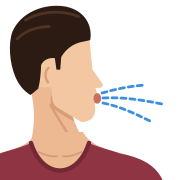
- Empty your lungsBreathe out slowly through your mouth so you start from empty.
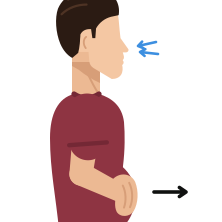
- Breathe in for fourBreathe in quietly through your nose for a slow count of four, letting your belly move out.
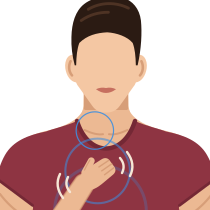
- Pause for fourPause with the air in for four counts. Keep your throat open and soft, as if you were simply waiting, not clamping shut.
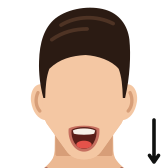
- Breathe out for fourLet the air out for four counts, smooth and even.
- Pause for four, then repeatPause with your lungs empty for four counts, then start the next box. Three or four rounds fill about a minute.
Your cue: In for 4 · hold 4 · out for 4 · hold 4.
What it should feel like
Even and unhurried, like tracing the four sides of a square with your breath. The pauses feel like a calm moment of stillness, not like being underwater: no pressure in your head, no tight throat. By the third round your breathing should be slower than when you started and your shoulders lower. If you feel short of air, shorten every side to three counts.
Why it helps
Nerves speed up your breathing and push it up into your chest, and your voice follows: faster, higher and more breathless. Box breathing works against that by making each breath slow and deliberate. Cleveland Clinic describes it as a simple way to help your body move out of a stressed state, and stresses breathing gently and staying at a comfortable level rather than straining. The NHS recommends a similar slow, low breathing exercise as a calming technique for stress.
The research is promising but limited. In a randomized trial at Stanford, people did five minutes of breathwork a day for a month; as a group, the breathing practices, box breathing among them, improved mood more than mindfulness meditation did, and an exhale-focused pattern did best (Balban et al., 2023). That makes box breathing a reasonable relaxation practice. It is not a treatment for anxiety.
For your voice, the point is the start. A calmer body speaks at a calmer pace, with air to spare at the end of a sentence, and that steadiness is much of what listeners hear as confidence. That’s why DEEP VOICE opens the Calm voice and Before a presentation routines with box breathing, then brings the voice in gently with exercises like the slow exhale and lip trills. If anxiety is strong, frequent or getting in the way of daily life, talk to a doctor or a mental health professional.
Common mistakes
- Clamping the throat on pausesHolding with a locked throat builds tension exactly where you want ease. Pause with the throat open, as if mid-sigh.
- Counts that are too longFour is a guide, not a test. If you end up gasping, use three counts, or drop the pauses until it feels easy.
- Breathing into the chestLet the in-breath move your belly, not your shoulders. A hand on your belly helps.
- Rushing the countCount at about one per second so the whole pattern slows you down instead of speeding up.
Make it easier or harder
Easier
Drop the pauses and simply breathe in for four and out for four, or shorten every side of the box to three counts.
A step further
After a few rounds, keep the same slow rhythm and speak your opening line on an out-breath, then pause and breathe before the next one.
Safety: If the pauses make you lightheaded, dizzy or more anxious, skip them and breathe in and out slowly instead. If you have a heart or lung condition, ask your doctor whether breath holds suit you.
Where it fits
In the DEEP VOICE app, box breathing is part of 2 ready-made warm-ups:
- Before a presentation (8 min): For a talk, a pitch or a toast: grounded, warm and clear.
- Calm voice (6½ min): Slow your breath and soften a tight throat before something tense.
Read more in Vocal warm-up for speaking and How to speak slower.
Questions people ask
Does box breathing help with anxiety?
Many people find it calming, and slow breathing practices have some research behind them for mood and stress. It’s a self-help relaxation tool, not a treatment. If anxiety is affecting your daily life, talk to a doctor or a mental health professional.
How long should you do box breathing?
A minute, or three to four rounds, is enough to settle before you speak. Practicing once or twice a day when you’re calm makes it easier to use when you’re nervous.
Is box breathing the same as 4-7-8 breathing?
No. Box breathing uses four equal sides, including a pause after the out-breath, while 4-7-8 breathing uses a long hold and an even longer out-breath. Both slow you down. If holds feel uncomfortable, a slow exhale is the gentler option.
Can box breathing help my voice before a presentation?
Indirectly. It won’t change how your voice sounds by itself, but starting calm usually means a slower pace and steadier breath. Follow it with a gentle voice warm-up such as lip trills or humming.
Sources
- How box breathing can help you destress, Cleveland Clinic
- Brief structured respiration practices enhance mood and reduce physiological arousal (Balban et al., Cell Reports Medicine, 2023), Huberman Lab, Stanford University School of Medicine
- Breathing exercises for stress, NHS
Your voice, safely
- Stay in your comfortable range. Never push your voice below what feels easy.
- No pressing on your throat or voice box, and no vocal fry or creak as a technique.
- Stop if it hurts or feels hoarse, scratchy or tired. Drink water and rest your voice.
- Hoarse for more than four weeks (sooner if you smoke), pain when you speak or trouble breathing? See an ENT doctor or a speech-language therapist.
These exercises are voice practice, not medical treatment. More on voice safety.